Tracing deeply buried utilities in densely packed corridors presents two major field challenges: overcoming rapid signal attenuation at extreme depths and managing equipment logistics when hunting diverse target sizes. The IDS GeoRadar Chaser XR solves this by deploying patented Equalized Scrambled Technology (EsT) across an ultra-wide 80 MHz to 1500 MHz frequency spectrum, packing full-spectrum subsurface profiling into an ultra-portable single-antenna footprint.
| Specification / Feature | Traditional Multi-Antenna Systems | IDS GeoRadar Chaser XR |
| Frequency Spectrum | Fixed Single/Dual (e.g., 350 MHz / 800 MHz) | Ultra-Wideband 80 MHz – 1500 MHz (EsT) |
| Hardware Required | 2–3 swapped antennas or bulky stacked arrays | 1 All-in-One Dual-Polarization Antenna |
| Antenna Weight | 40 lbs – 60+ lbs (Total system setup) | 10.6 lbs (Antenna without batteries) |
| Physical Dimensions | Large cart footprint / Heavy frame | 16.1" x 16.1" x 7.5" Compact Footprint |
| Corridor Resolution | Target blending / Signal masking | High-resolution separation of parallel lines |
Form Factor Revolution: Replacing a Fleet of Antennas with 10.6 Pounds
In traditional geophysical surveying, sweeping a site from shallow fiber optics down to deep infrastructure meant loading work trucks with multiple heavy antenna enclosures. Pushing lower frequencies (80–200 MHz) for deep penetration historically required massive, unwieldy dipole boxes, while capturing high-frequency detail required a second or third pass with separate specialized heads.
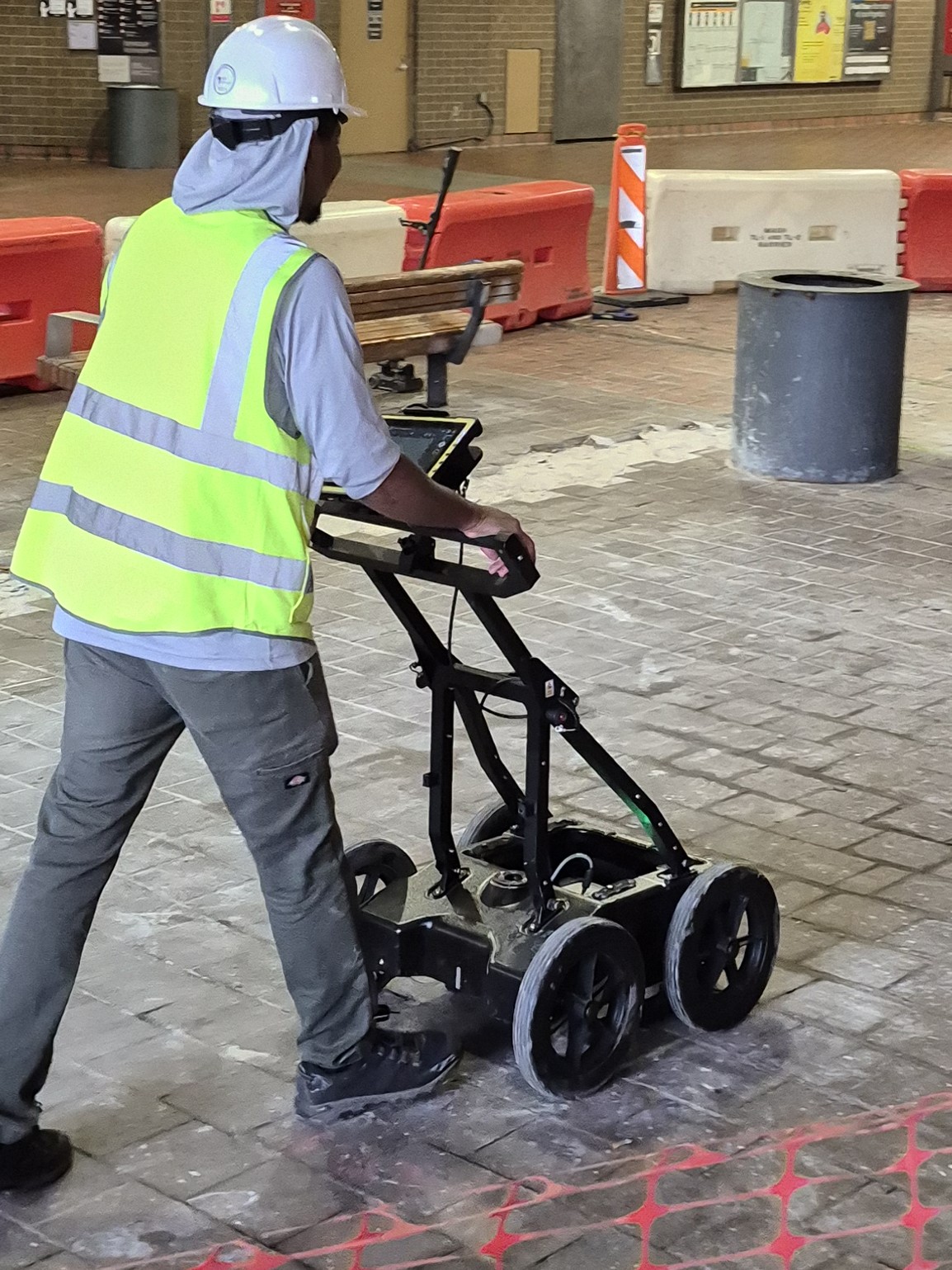
The Chaser XR consolidates that entire equipment inventory into a single 16.1" x 16.1" x 7.5" antenna enclosure weighing just 10.6 lbs. By driving an ultra-wide 80 MHz to 1500 MHz sweep inside one lightweight housing, field operators eliminate the backbreaking need to lug 50+ lb stacked antenna arrays or swap hardware mid-survey. The compact frame allows crews to transition effortlessly between a hand-push cart, pulling pole, or rugged drag kit for steep embankments, dense brush, and narrow utility easements.
Overcoming Signal Bleed-Off in Congested Corridors
In congested rights-of-way, closely spaced metallic utilities create complex signal reflections. Standard radar pulses often bleed across adjacent targets, resulting in ghost reflections or merging distinct utility signatures into an unreadable blur.
Equalized Signal Reception: The Chaser XR dynamically balances returning signal frequencies, filtering out background noise so shallow metallic lines don't blind the receiver to deeper targets.
Scrambled Pulse Modulation: By modulating the signal spectrum, the transmitter injects maximum energy into the subsurface without distorting shallow return data, delivering clean line separation.
Agile Form Factor: Weighing only 10.6 lbs, the system easily maneuvers through tight easements, around obstructions, and over rough terrain where bulky cart systems fail.
Maximum Depth Penetration Without Resolution Loss
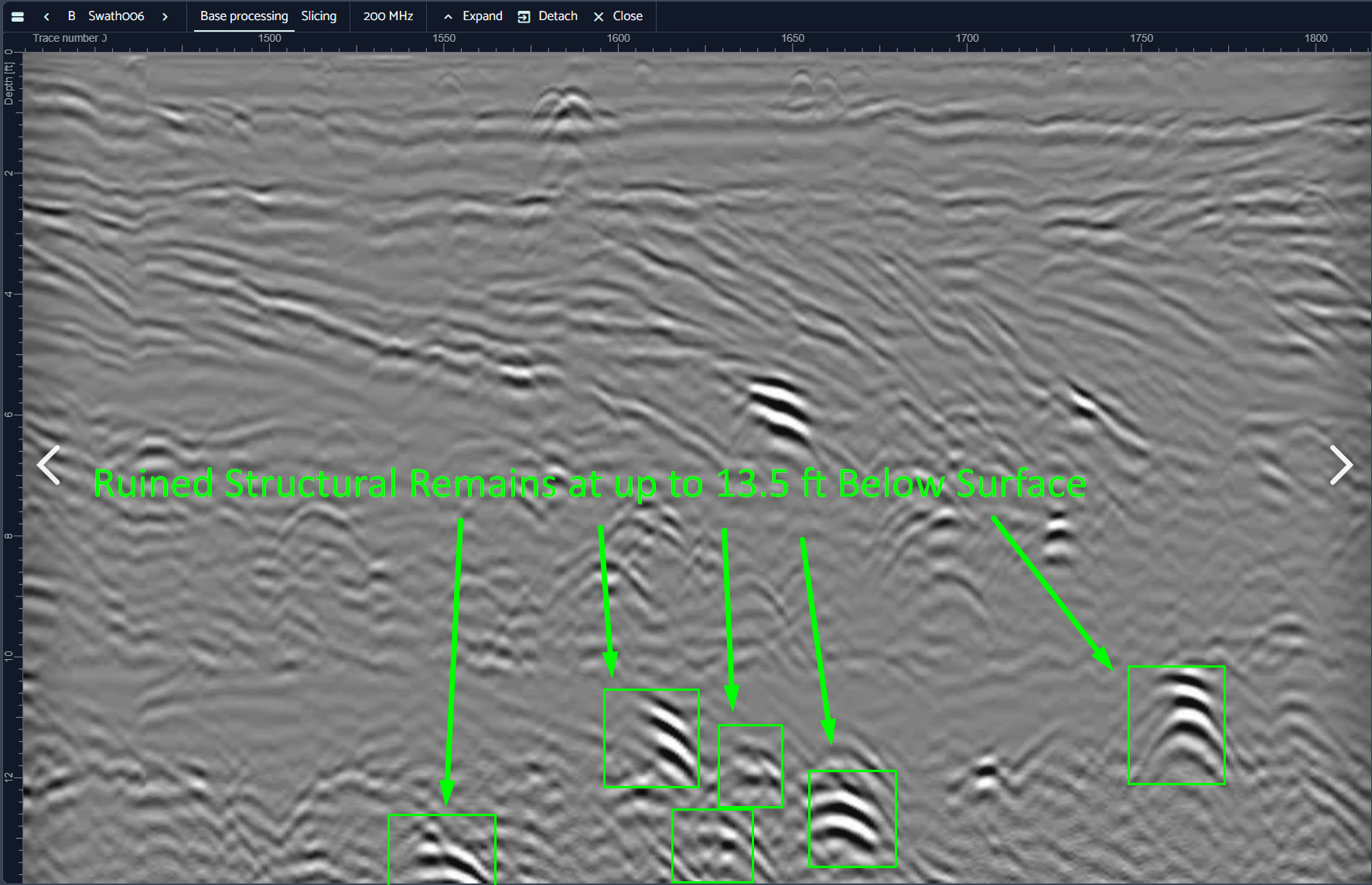
Conventional low-frequency antennas reach deep into the ground but lack the resolution to identify small conduits. The Chaser XR captures low-end 80 MHz wavelengths for deep penetration alongside high-end 1500 MHz frequencies for sharp target clarity in a single pass.
Deep Asset Detection: Penetrates deep into favorable soils to identify concrete culverts, water mains, and heavy transmission lines.
Single-Pass Efficiency: Captures both shallow service drops and deep infrastructure simultaneously, eliminating the need to sweep a site with multiple antennas.
Bigman Geophysical supplies the Leica IDS Chaser XR system for purchase or rental, complete with field support and training. Contact our team today to schedule a demo and upgrade your deep utility locating capabilities.
Watch the IDS GeoRadar Chaser XR EsT Technology Overview to see how EsT signal equalization operates inside the compact Chaser XR housing to resolve target clarity at extended depth ranges.