Modern structural health monitoring demands higher precision than any single non-destructive testing (NDT) technology can deliver on its own. While Ground Penetrating Radar (GPR) remains the industry standard for imaging embedded structural elements, pairing it with Ultrasonic Pulse Echo (UPE) provides a complete, multi-physics diagnosis of concrete integrity.
The High-Resolution Baseline: Ground Penetrating Radar (GPR)
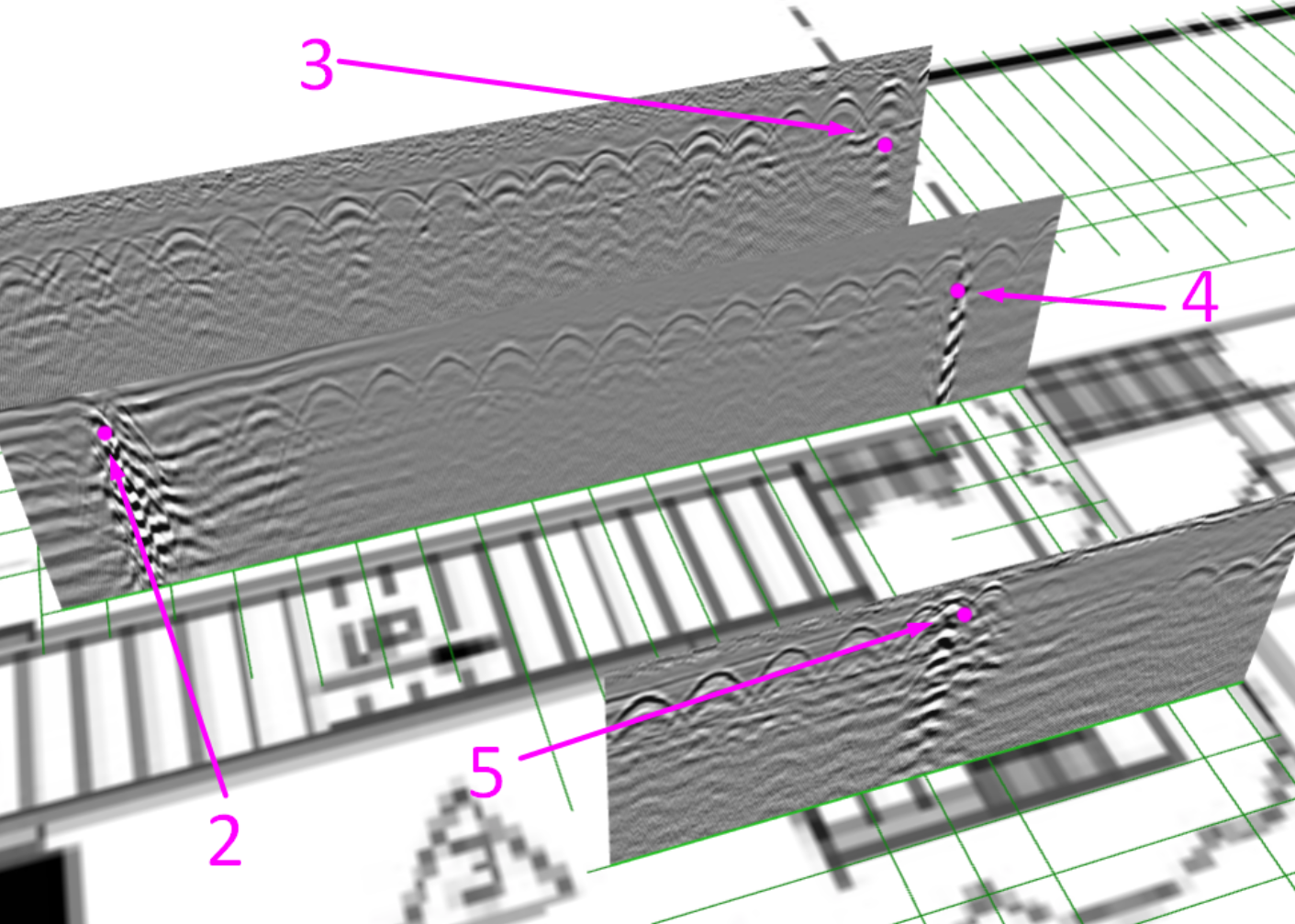
High-frequency GPR utilizes electromagnetic pulses to rapidly map internal concrete geometry. It delivers precise 3D layouts of rebar grids, post-tension cables, and electrical conduits while measuring overall slab thickness across large surface areas. However, GPR relies strictly on dielectric contrasts. Dense top-layer rebar mats can cause signal "shadowing," and paper-thin air delaminations or fine micro-fractures often fail to generate strong electromagnetic reflections.
Acoustic Precision: Ultrasonic Pulse Echo (UPE)
Where electromagnetic waves face physical limitations, acoustic waves excel. UPE transmits high-frequency sound pulses into the concrete and measures reflections caused by changes in acoustic impedance. Because air has a vastly different acoustic impedance than solid concrete, UPE easily identifies thin horizontal delaminations, honeycombing, debonded overlays, and internal voiding—even in zones shadowed by steel reinforcement.
The Multi-Sensor Advantage
Integrating GPR and UPE creates a comprehensive concrete evaluation workflow:
Speed & Subsurface Mapping (GPR): Rapidly scans large concrete decks or walls to map reinforcement patterns, detect embedded conduits, and identify overall thickness.
Integrity & Flaw Detection (UPE): Surgically inspects suspicious areas to diagnose sound concrete versus degraded zones, pinpointing subtle air gaps, internal cracking, and delaminations that radar energy passes through.
At Bigman Geophysical, combining GPR and UPE eliminates diagnostic blind spots, providing structural engineers with actionable data before coring, saw-cutting, or retrofitting.
On the limits of GPR for Structural Assessments
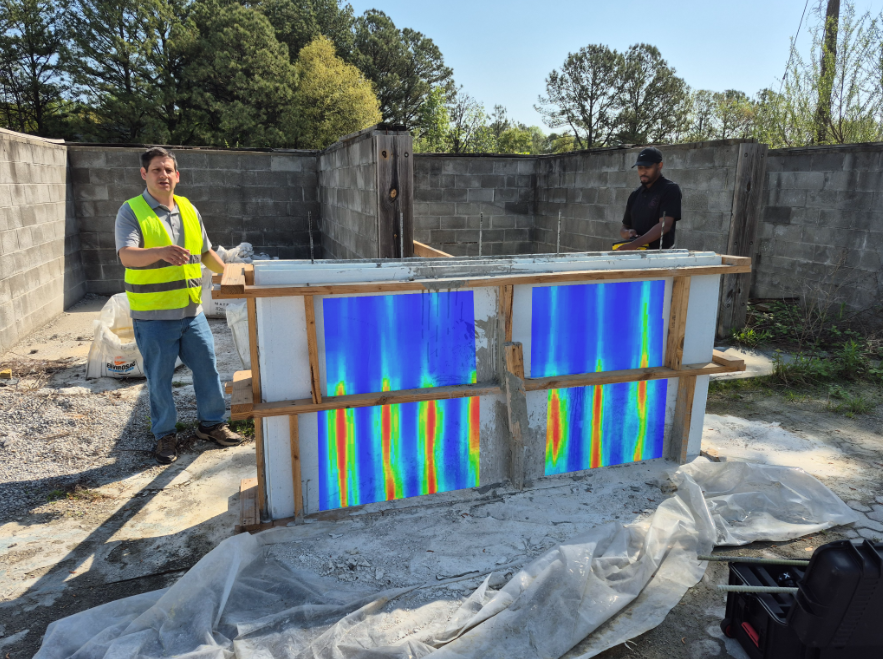
In this video, Dr. Daniel Bigman from Learn GPR demonstrates the practical limitations of GPR when detecting fine air delaminations and shows how Ultrasonic Pulse Echo provides the missing acoustic data to verify concrete integrity.