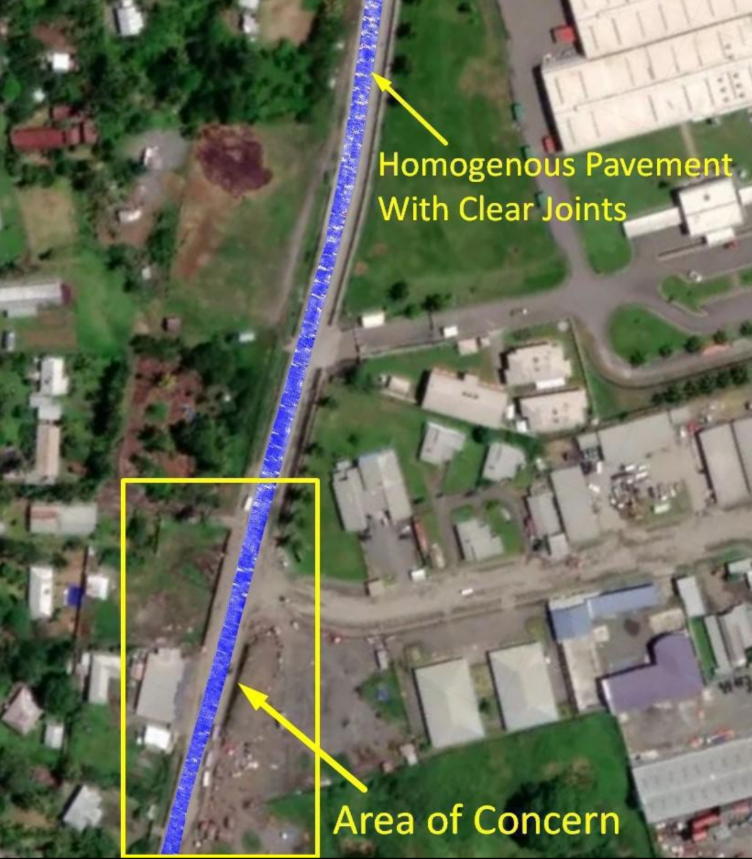
It feels like a modern infrastructure paradox: despite advanced polymer-modified asphalt and heavy machinery, new roads often develop potholes, rutting, and premature cracking faster than highways built decades ago. The culprit is rarely the surface asphalt itself. Modern paving schedules, record-heavy freight traffic, and shifting climate patterns put immense pressure on what lies beneath: the sub-base and subgrade layers.
When the sub-base degrades, the pavement above loses structural support and collapses under routine traffic loads. Traditional road inspection relies on visual surveys (which only catch failures after they reach the surface) or destructive core sampling (which offers isolated, spot-check data). Pavement forensics powered by Ground Penetrating Radar (GPR) offers a non-destructive alternative, diagnosing sub-base decay long before asphalt breaches.
Why Modern Sub-Bases Fail Early
Premature pavement distress usually stems from hidden subsurface dynamics:
Inconsistent Compaction: Fast-paced construction timelines can lead to unevenly compacted subgrade soils, leaving hidden pockets prone to differential settlement under heavy axle loads.
Moisture Entrapment & Washout: Inadequate subsurface drainage allows water to pool beneath impermeable asphalt layers. Traffic weight creates hydraulic pressure that drives water through aggregate, stripping fine materials and carving out washout channels.
Interlayer Delamination: Moisture trapped between asphalt lifts breaks the chemical bond between layers, causing internal shear failure before surface cracking appears.
How GPR Diagnoses Subgrade Decay
Ground Penetrating Radar sends high-frequency electromagnetic pulses through the pavement, recording reflections created by changes in material density and moisture levels.
Continuous Layer Thickness Mapping
GPR collects continuous profiles of asphalt and base layer thickness at drive-speed. Sudden changes in layer thickness often reveal historical sub-base settling that was simply paved over during construction.
Moisture Anomaly & Stripping Detection
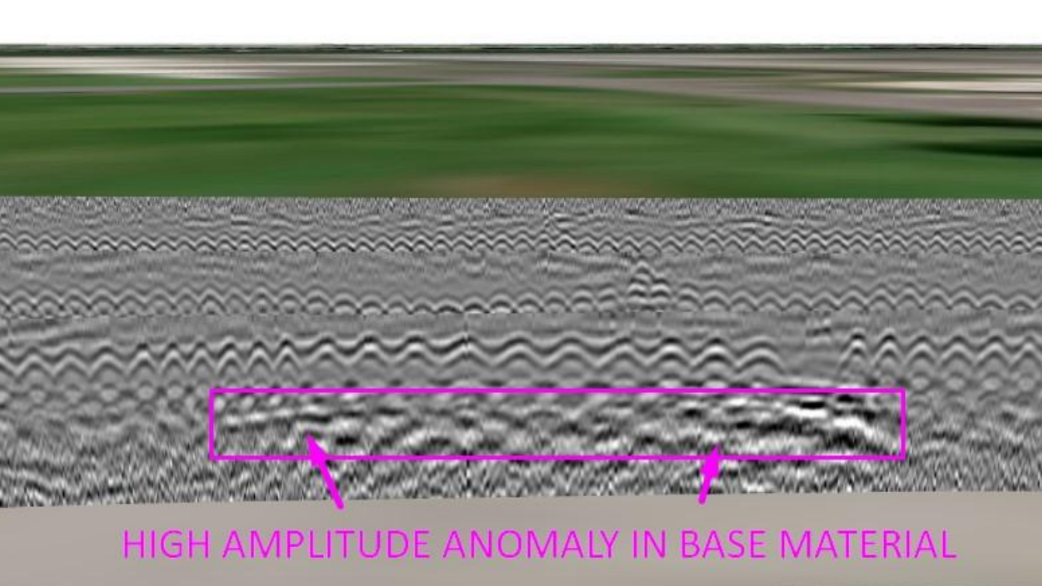
Water dramatically shifts the dielectric properties of soil and aggregate. GPR easily flags saturated base materials and debonded asphalt layers before structural fatigue shows up on the surface.
Void & Washout Localization
Where sub-base erosion creates subsurface voids, GPR maps their precise boundaries and depth, allowing municipal teams to stabilize the soil with targeted grout injection rather than repaving entire stretches.
From Reactive Patching to Forensic Diagnosis
At Bigman Geophysical, we equip civil engineers and pavement managers with high-resolution GPR scanning to pinpoint the exact root causes of road distress. Replacing blind core drilling with targeted geophysical profiling cuts diagnostic costs, reduces traffic closures, and ensures road repairs address the real problem beneath the asphalt.