Post-tensioned (PT) concrete slabs rely on high-strength steel cables stretched under tens of thousands of pounds of force to deliver their load-bearing strength. Striking one of these active tendons during routine core drilling, saw-cutting, or anchoring isn't just an expensive construction mishap—it is a major structural hazard and a severe life-safety risk.
When a tensioned cable is severed, the sudden release of energy can cause it to burst violently out of the slab, leading to severe injury, sudden structural failure, and immediate site shutdowns. Preventing these strikes requires imaging the interior of the slab with specialized Ground Penetrating Radar (GPR) before any bit or saw blade touches the surface.
Why Post-Tension Cables Present Unique Risks
Unlike standard steel rebar, which sits in flat, static grids, post-tensioned cables introduce dynamic structural challenges:
Extreme Stored Energy: PT cables are held under thousands of pounds of tension. Severing a strand can send metal whipping through the concrete with explosive force.
Parabolic Drape Profiles: PT cables do not maintain a uniform depth. They drape up and down throughout the slab—dipping low near mid-span to support bending loads and rising high over support columns.
Tight Tolerances for Renovations: Core drilling for plumbing, electrical lines, or HVAC retrofits often needs to occur in the same slab regions where PT cables drape closest to the surface.
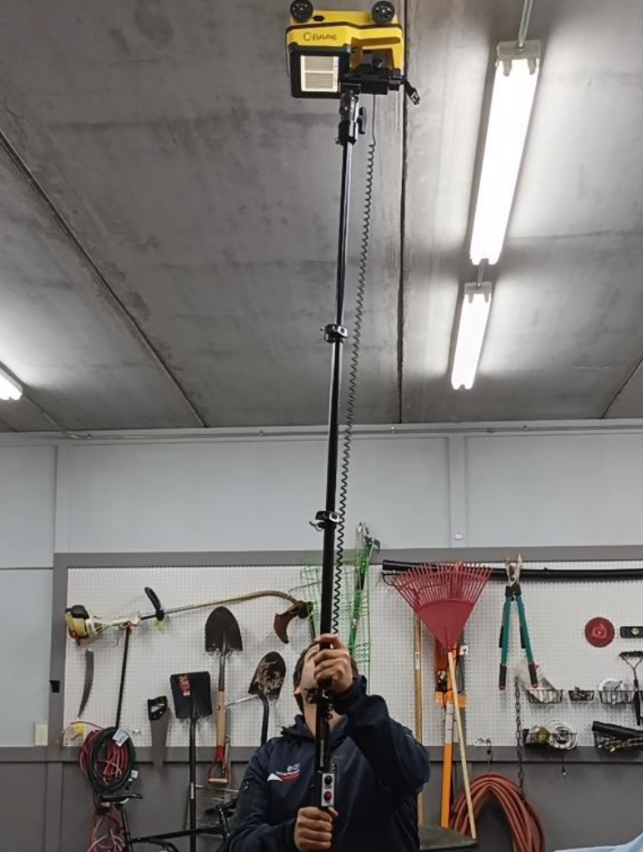
How Specialized GPR Scans Safeguard Slabs
High-frequency GPR antennas send electromagnetic pulses into the slab to map internal geometry with millimeter-level precision:
Distinguishing Tendons from Rebar: Standard rebar forms fixed horizontal grids. GPR analysts identify PT cables by tracking their signature parabolic depth changes across continuous profile lines.
Precise Depth & Clearance Mapping: High-frequency radar identifies the exact depth of cover above each tendon, highlighting safe clearance zones for shallow anchoring or conduit pathways.
Real-Time Site Marking: Geophysics teams plot tendon trajectories directly onto the concrete surface, giving cutting crews a clear visual roadmap to work around.
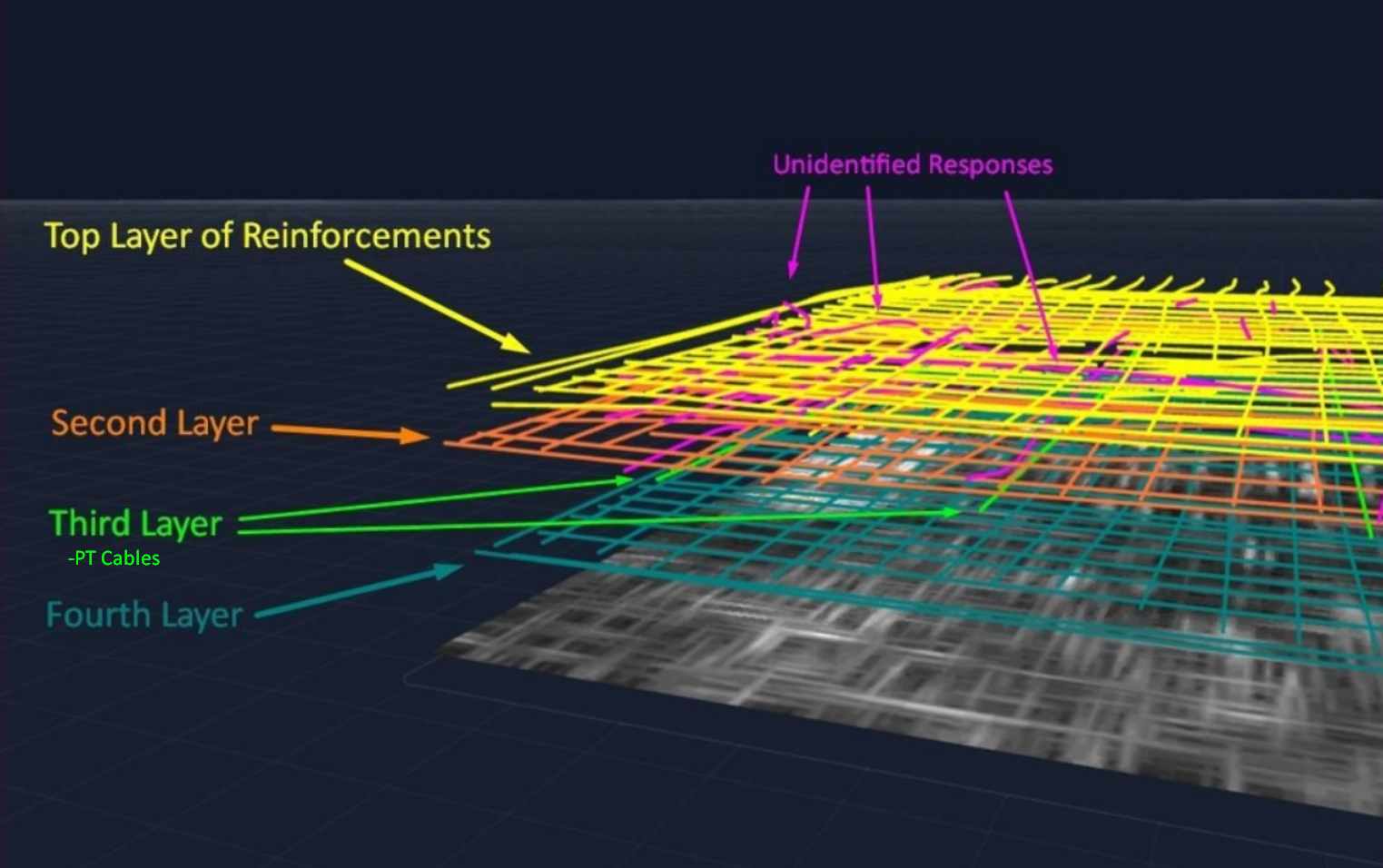
At Bigman Geophysical, specialized concrete scanning replaces guesswork with structural certainty, keeping job-site crews safe while protecting the integrity of post-tensioned buildings.
Concrete Scanning with GPR Webinar
This video by Dr. Daniel Bigman from the Learn GPR Academy covers essential field techniques, antenna selection, and data interpretation strategies for locating embedded steel and post-tension cables safely before drilling or coring.