When selecting Ground Penetrating Radar (GPR) for subsurface utility engineering (SUE), field managers face a fundamental hardware decision: deploy a high-density, multi-channel mass array or rely on an agile, dual-frequency walk-behind cart. While both systems utilize radio waves to detect buried metallic and non-metallic infrastructure, their internal architectures dictate entirely different field workflows and data deliverables.
Two of the leading solutions representing these opposing philosophies are the IDS GeoRadar Stream DP mass array and the Leica DS4000 dual-frequency walk-behind system. Understanding how the Stream DP's 30-channel array compares to the dual-antenna layout of the DS4000 is critical for matching equipment to jobsite geometry, coverage requirements, and processing constraints.
The Core Architectural Split: Mass Channel Array vs. Dual-Frequency Precision
The primary distinction between these two systems lies in antenna density, polarization, and channel count.
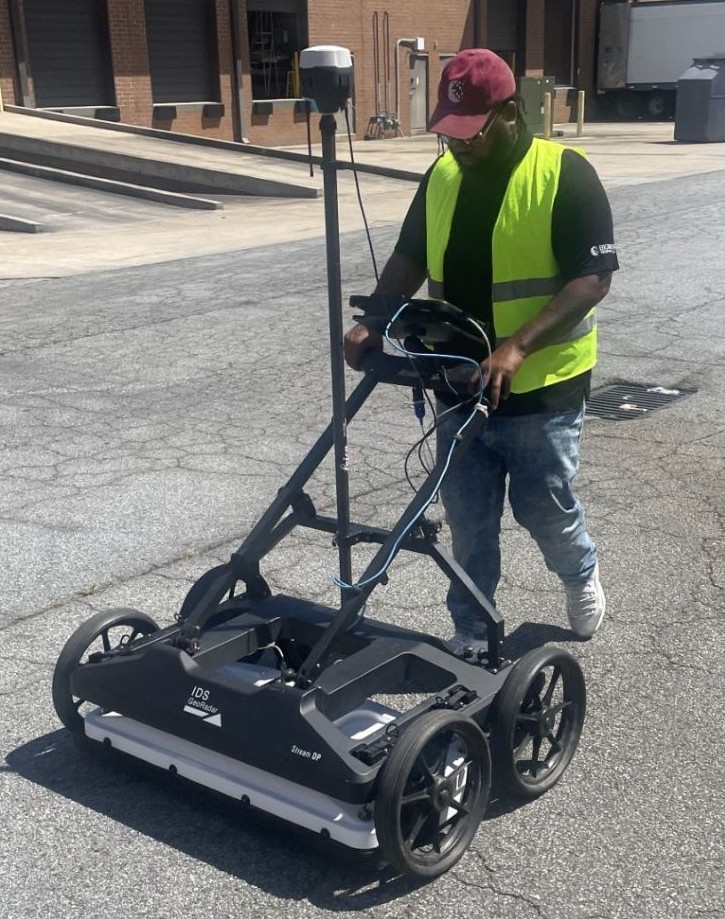
IDS GeoRadar Stream DP (Mass Array): Built with 30 individual radar channels arranged across an 82.5 cm scan width, utilizing double polarization (19 VV channels and 11 HH channels). It collects dense 3D volumetric spatial data across a wide swath in a single pass.
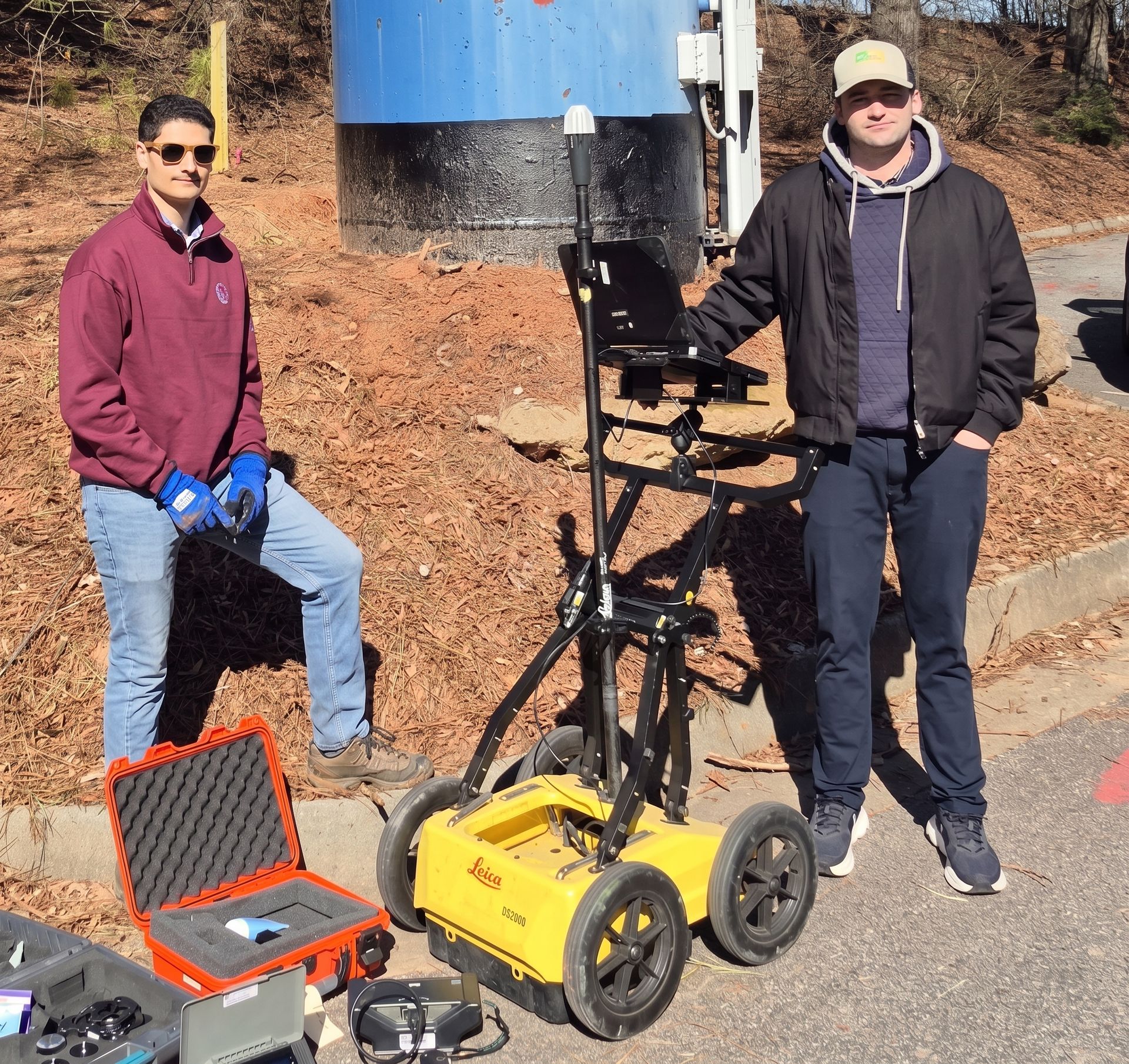
Leica DS4000 (Walk-Behind Cart): Built as a 2-channel, dual-antenna system integrating 200 MHz and 900 MHz central frequencies powered by Equalized Scrambled Technology (EsT). It focuses on streaming two simultaneous depth profiles along a single, maneuverable transect.
The Stream DP: High-Density 3D Mapping and Swath Coverage
Traditional single- or dual-channel GPR requires operators to push the cart along a tight orthogonal grid (e.g., 0.5-meter cross-lines) to reconstruct a 3D subsurface model. If a utility runs parallel to the direction of travel, single-polarization antennas frequently miss it entirely.
The Stream DP eliminates grid-scanning bottlenecks through sheer hardware density:
Dual Polarization (VV + HH): Combining Vertical-Vertical and Horizontal-Horizontal polarization channels allows the Stream DP to detect linear utilities regardless of their orientation relative to the cart's direction of travel.
Dense Channel Spacing: With VV channel spacing down to 4.3 cm and HH spacing at 7.5 cm, the array captures uninterrupted 3D tomographic time-slices across an 82.5 cm swath.
Massive Data Yield for GIS: Rather than generating isolated 2D line scans, the Stream DP streams dense volumetric data directly into software platforms like IQMaps for automated pipe detection (APD) and enterprise CAD/GIS exports.
This makes the Stream DP the premier choice for large-scale area mapping—such as city intersections, industrial facility expansions, and roadway rights-of-way where sweeping vast square footage in minimal passes is paramount.
The Leica DS4000: Agile Dual-Band Depth Penetration
While a 30-channel mass array excels on open asphalt, pushing a wide 82 cm cart through crowded urban sidewalks, tight alleys, or cluttered construction sites can be challenging. This is where the Leica DS4000 shines.
Weighing just 20 kg (44 lbs) and engineered with a compact, foldable frame, the DS4000 emphasizes high-resolution targets and rapid, single-line utility markouts:
Dual-Frequency Versatility: The 900 MHz antenna provides sharp, high-resolution imaging for shallow conduits and rebar, while the 200 MHz antenna delivers deep signal penetration down to several meters.
EsT (Equalized Scrambled Technology): Patented signal processing extends the dynamic range of the radar pulse across an extended 80–1500 MHz inspection bandwidth, boosting deep-target signal-to-noise ratios without compromising shallow-depth resolution.
On-Site Real-Time Markouts: Equipped with uMap field software, the DS4000 allows technicians to perform quick line scans, identify utility hyperbolas in real time, and paint marks on the ground immediately without mandatory post-processing.
Operational Comparison: Which Tool Fits Your Workflow?
| Feature / Capability | Stream DP (Mass Array) | Leica DS4000 (Walk-Behind) |
| Number of Channels | 30 Channels (19 VV + 11 HH) | 2 Channels |
| Antenna Configuration | Array (Multi-polarization) | Dual-Frequency (200 MHz & 900 MHz) |
| Swath / Scan Width | 82.5 cm (32.5 in) | Single Line Transect |
| Primary Output | Full 3D Subsurface Tomography | 2D Depth Profile & On-Site Paint Markouts |
| Ideal Jobsite Environment | Large open areas, roadways, plant sites | Narrow corridors, crowded urban sidewalks, rough terrain |
| Primary Workflow | High-volume 3D GIS/CAD mapping | SUE Quality Level B pinpointing and line tracing |
By deploying the Stream DP for high-volume 3D data capture across vast project footprints and leveraging the Leica DS4000 for rapid line-trace verification in tight spaces, SUE teams establish complete subsurface clarity regardless of site constraints.
Deep 3D Utility Mapping with Revolutionary GPR Technology
This video from CR Kennedy offers a detailed overview of how the Stream DP's 30-channel array and EsT signal processing operate in active field environments to generate real-time 3D subsurface tomography.