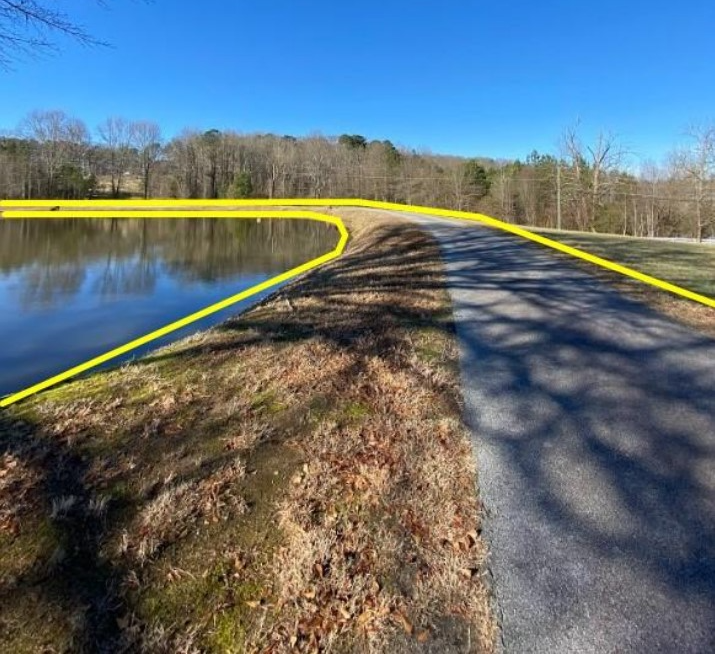
Maintaining the structural integrity of aging infrastructure is a constant challenge for property owners and engineers alike. One common concern for earthen dams—structures built from compacted soil—is bioturbation, or the damage caused by burrowing animals. If left unchecked, these hidden tunnels can create "pipes" through the embankment, leading to internal erosion and potential failure.
Recently, a geophysical investigation was conducted to assess an earthen dam and its associated roadway. Because traditional excavation is destructive and costly, the team employed a suite of non-invasive technologies to "see" beneath the surface.
The Tech Stack: How We See Underground
To get a comprehensive view of the subsurface, the investigation used two primary methods:
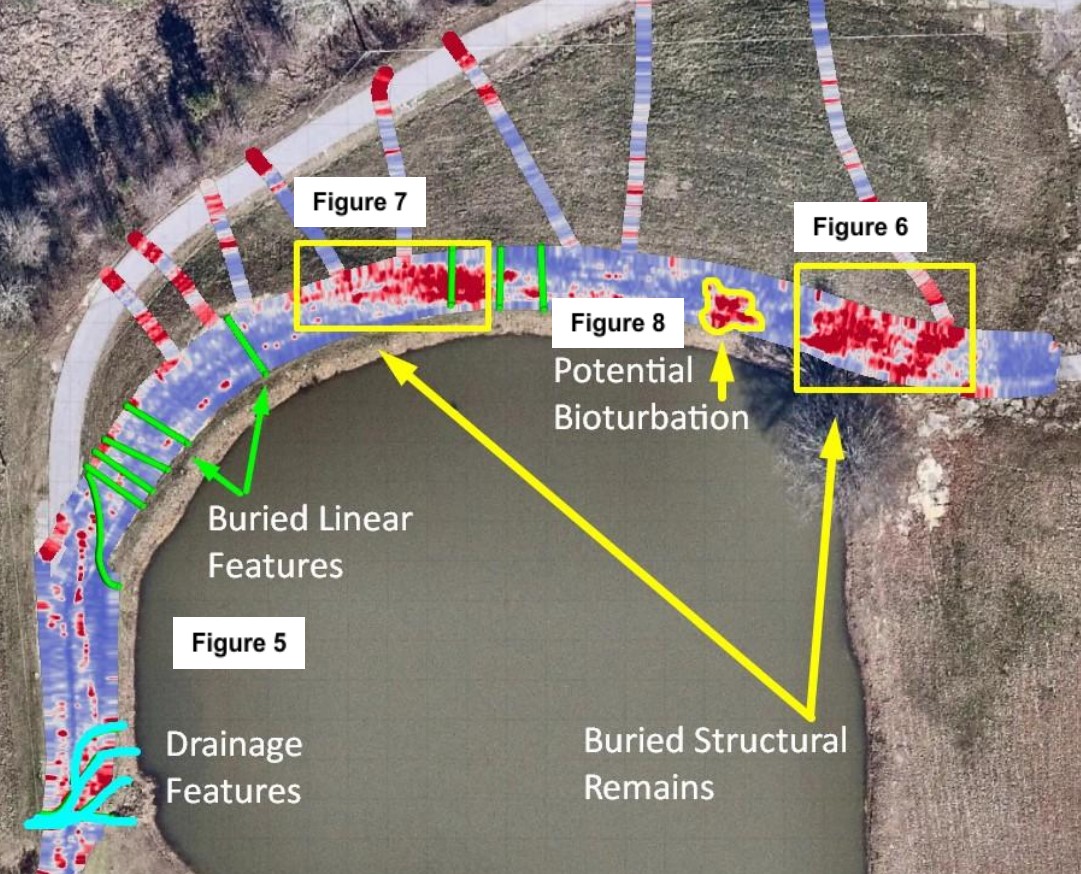
Ground Penetrating Radar (GPR): This tool sends electromagnetic pulses into the ground. When these waves hit a boundary between different materials—like soil and a hollow void—they reflect back to the surface.
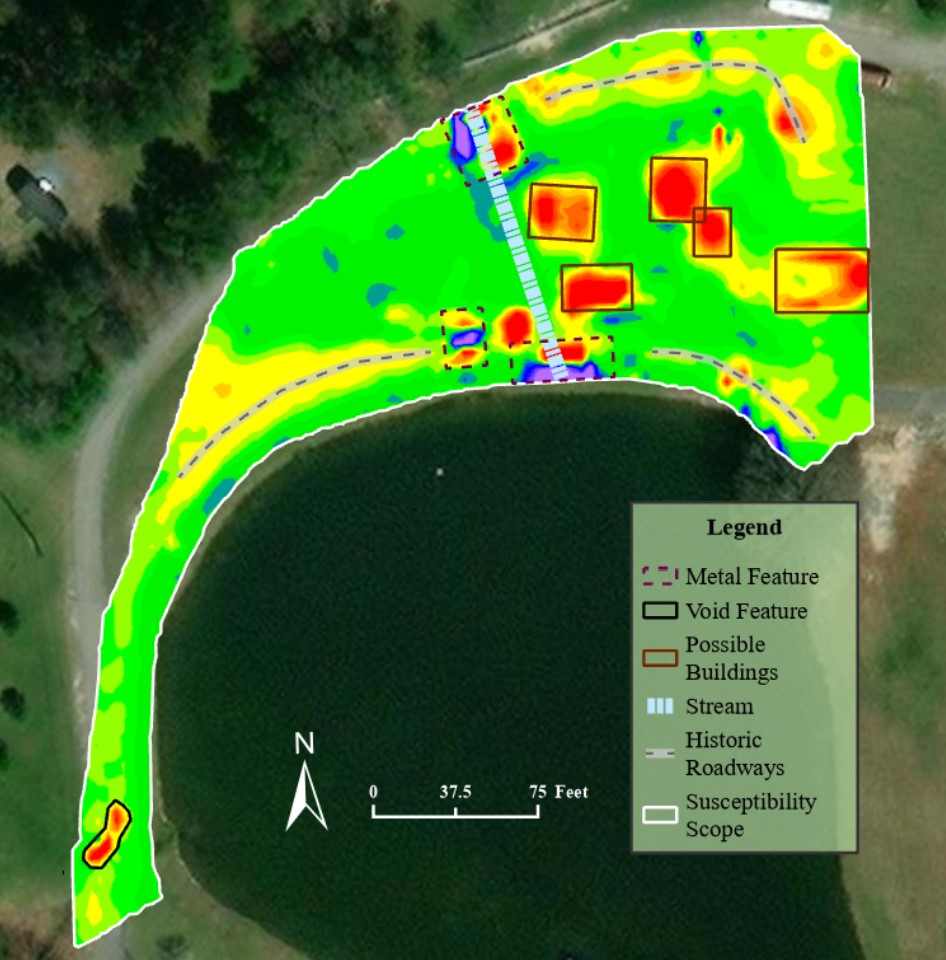
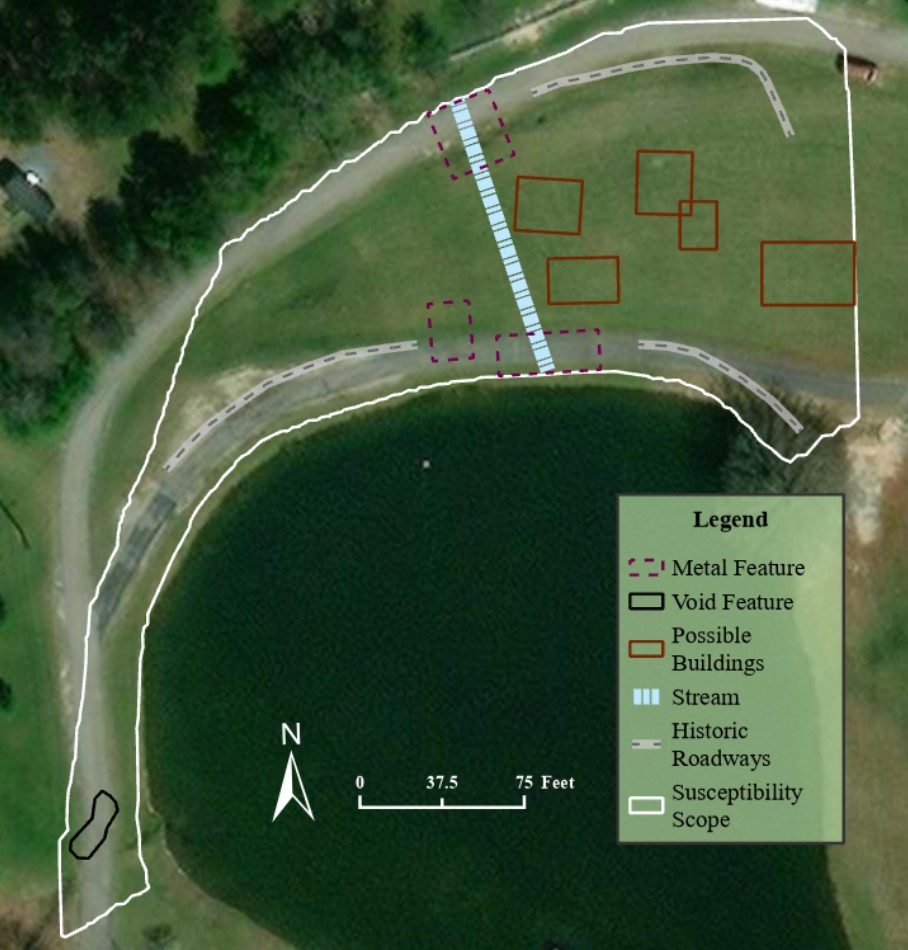
Electromagnetic Induction (EMI): A ground conductivity meter was used to measure both electrical conductivity and magnetic susceptibility. This is particularly useful for identifying buried metal, changes in soil moisture, and even underground water movement.
Electromagnetic Induction
Ground-Penetrating Radar
Uncovering a "Complex" History
The survey revealed a surprisingly dense history hidden beneath the soil. What appeared to be a simple earthen embankment was actually built over the remains of a former industrial facility. Findings included:
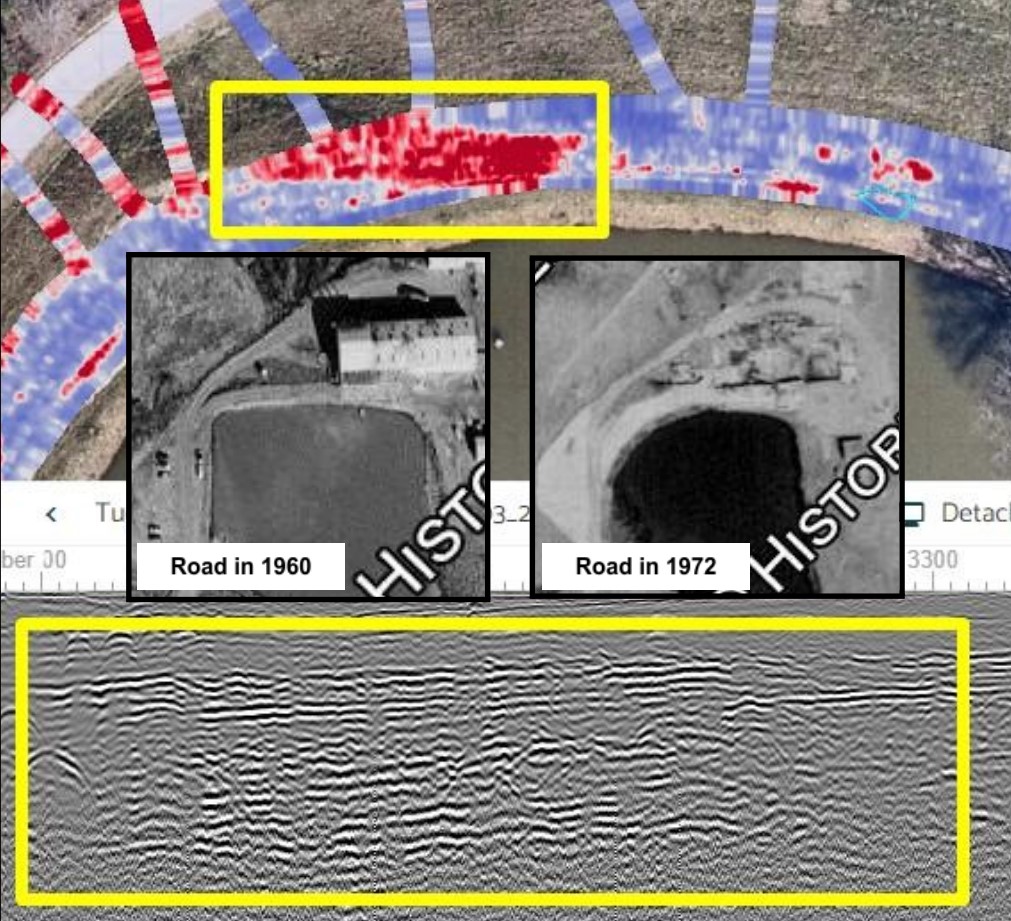
Historic Foundations: GPR identified a large, 40-foot-long structural component buried about three feet deep, likely a remnant of a building present in the 1960s.
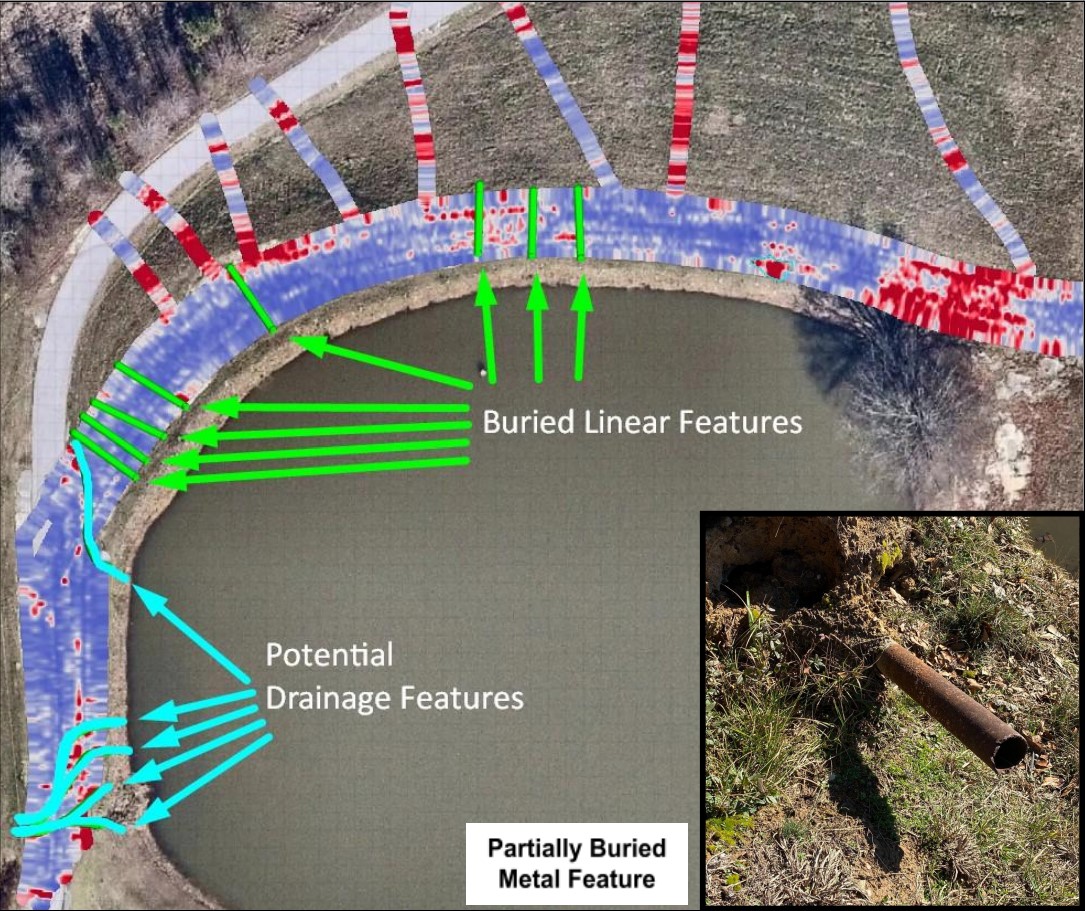
Abandoned Infrastructure: The team mapped out a buried road surface that had been rerouted decades ago, as well as several man-made drainage systems.
The "Anomalies": In one area, the GPR detected an amorphous, pit-like shape that could be evidence of animal burrows (bioturbation) or a man-made refuse pit.
The Verdict: Engineering Recommendations
The most critical finding was an anomaly along the pond's bank that appeared to contain a mix of metal and air. While this might be uncompacted building rubble used during the dam's construction, the EMI survey also detected a probable underground stream in the same spot.
The movement of underground water through uncompacted rubble can lead to soil erosion over time. Because the site's history is so complex, differentiating between man-made debris and animal burrows was often difficult.
The Next Steps: To ensure the dam's long-term health, we recommended minimally invasive testing, such as targeted soil coring or sampling. This allowed a qualified engineer to confirm the dam's internal stability and determine if any repairs are needed to prevent future issues.