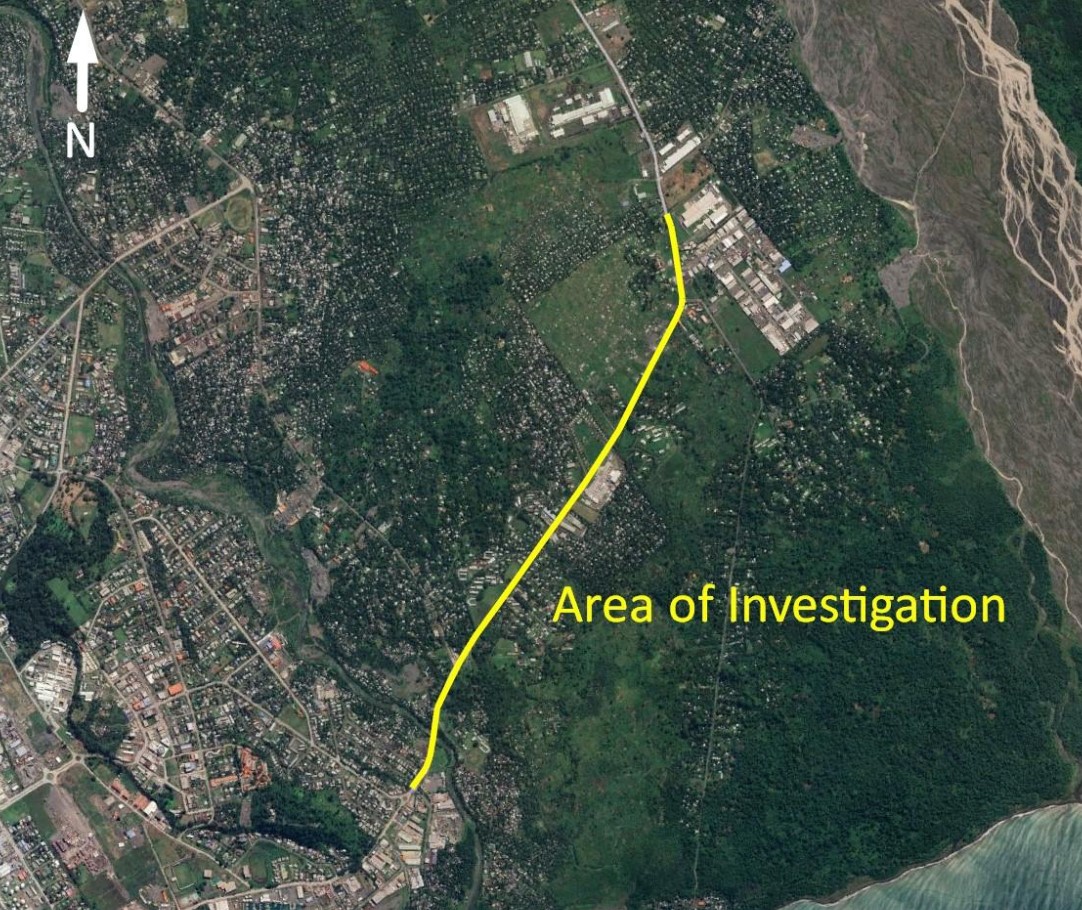
When you see a relatively new stretch of highway already showing signs of surface distress, you have to wonder: what went wrong? Surface cracks are often just the symptoms of much deeper, invisible issues. We recently conducted a high-tech "autopsy" on a roadway in the South Pacific to determine why a new section was failing while an adjacent, much older road remained in great shape.
By using Ground-Penetrating Radar (GPR), we were able to look beneath the asphalt and see the structural reality that blueprints alone couldn't reveal.
The Forensic Toolkit: X-Raying the Road
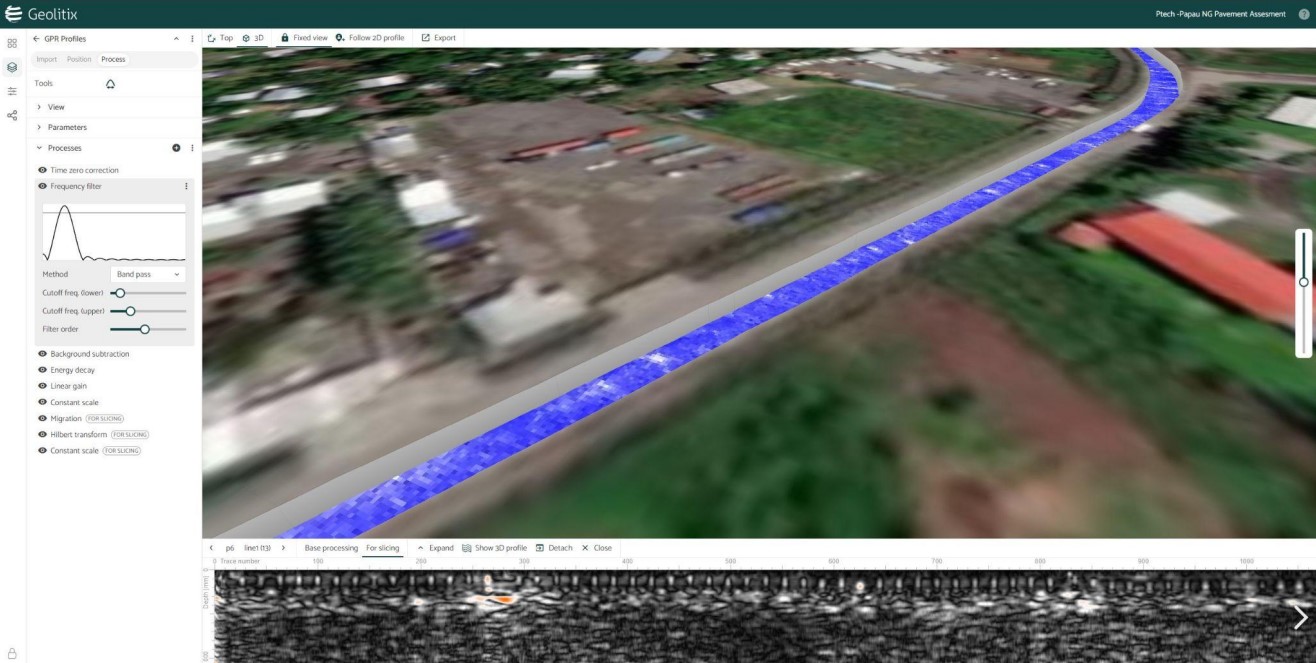
To get a clear picture, we deployed a 1000MHz GPR system equipped with high-precision GPS to map every inch of the roadway in a 3D computer model. GPR works by sending electromagnetic pulses into the ground; when these waves hit a change in material—like a transition from concrete to air or water—they reflect back, creating a detailed map of the subsurface.
Miles of Road: One Day of Scanning
A Tale of Two Roads: The Findings
Our investigation compared a healthy, older section of the road to a failing, recently constructed segment. The results were a stark reminder that age isn't always the primary factor in infrastructure health.
| Feature | The Healthy (Old) Road | The Failing (New) Road |
| Pavement Structure | Highly consistent and homogeneous. | Evidence of debonding and internal delamination. |
| Expansion Joints | Clean, well-drained, and predictable. | Significant washout and material degradation. |
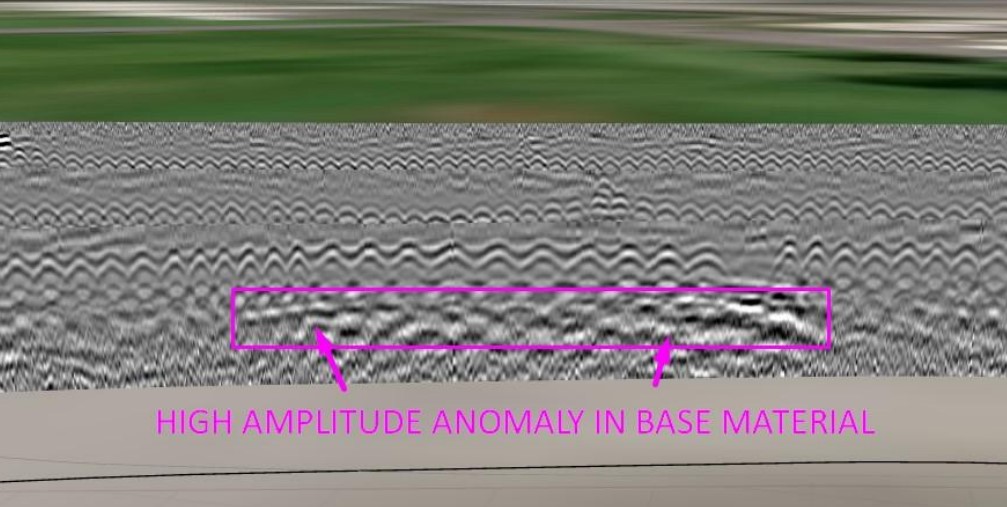
| Base Material | Solid and uniform. | Large void spaces (air pockets) and water infiltration. |
| Reinforcements | N/A | Dowel bars were found significantly "out of level". |
Expert Analytics
The Right Tools
The "Smoking Gun" Under the Surface
The 3D modeling revealed three critical issues that explain the systematic failure of the new pavement:
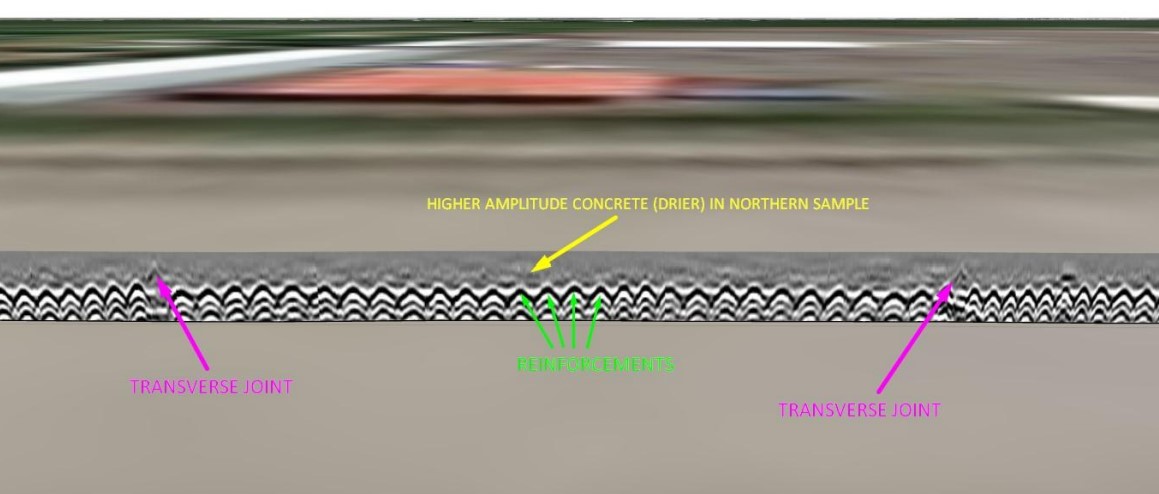
Misaligned Reinforcements: The dowel bars—the steel rods meant to transfer loads across expansion joints—were not parallel to the ground. This misalignment causes uneven stress and leads to faster cracking.
The "Wavy" Mat: We observed that the internal reinforcement mats were "wavy"—sitting close to the surface at some points and sagging deep in others. This suggests poor installation during the initial pour.
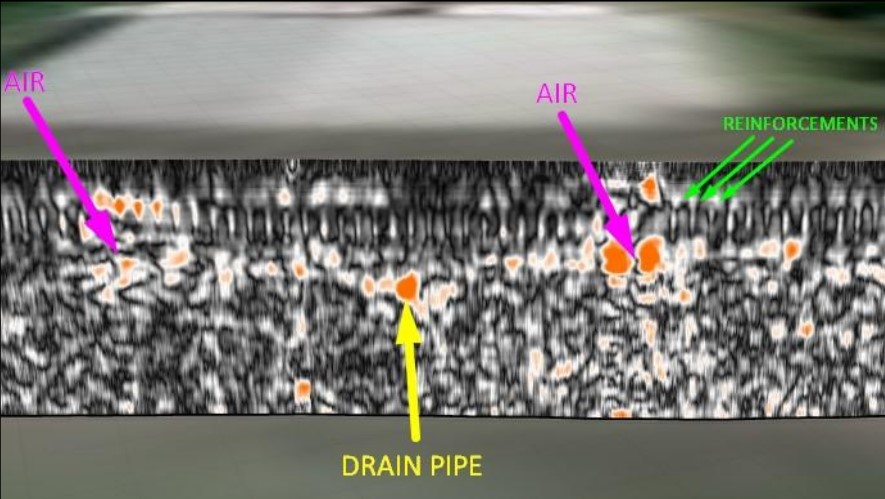
Washout and Voids: Perhaps most concerningly, we found massive "washout" areas beneath the joints. Using "heat maps," we identified regions where air and water had completely displaced the base material, leaving the pavement floating over a hollow space.
Why it Matters
When a road fails because of surface wear, it’s a maintenance issue. When it fails because the base material is washing away and the steel is crooked, it’s a structural failure. This type of data allows engineers to move beyond guesswork and identify exactly where the construction process broke down.
In this case, the GPR evidence clearly pointed toward poor bonding of materials and insufficient asphalt coverage as the primary culprits.