The Challenge: An Unknown Foundation
When dealing with aging infrastructure, "as-built" plans are often missing or unreliable. Bigman Geophysical was recently contracted to investigate a massive concrete pile supporting a large business sign. While the above-ground portion of the pile was easily measured at 5.5 feet in diameter, its subsurface depth and width were unknown. To ensure the structural integrity of the sign for future use, the client needed to verify a theory that the pile extended approximately 20 feet underground.
Our Multi-Sensing Approach
Because subsurface conditions can be unpredictable, we deployed a suite of geophysical sensors to cross-verify our findings:
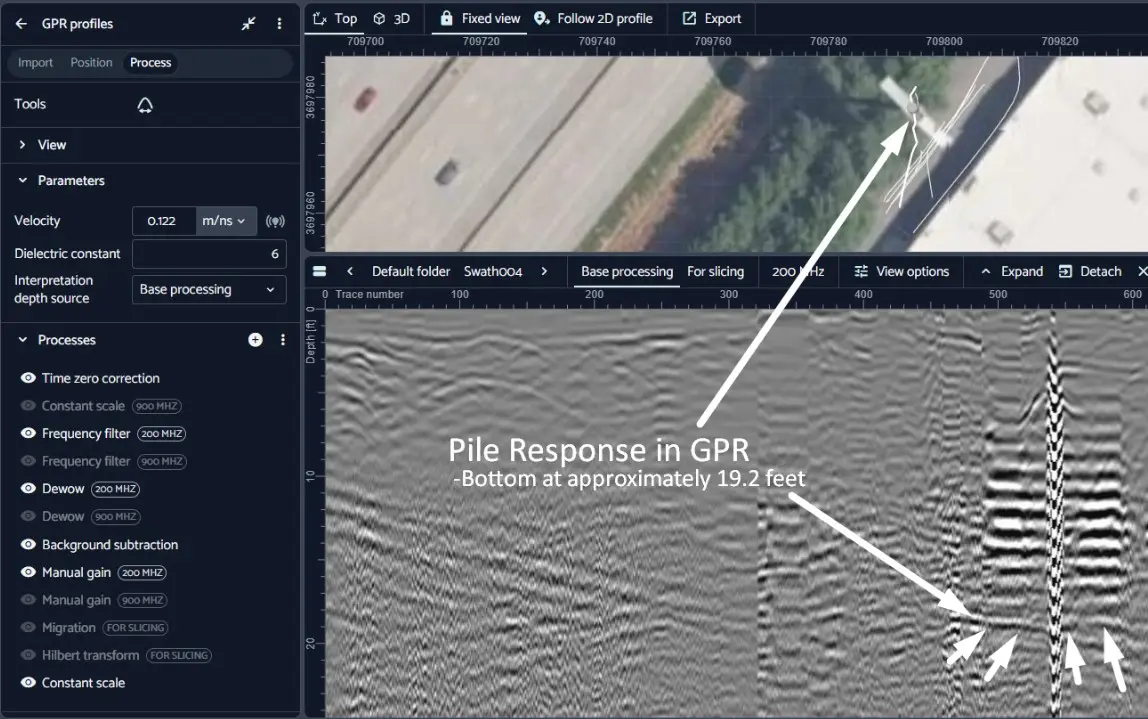
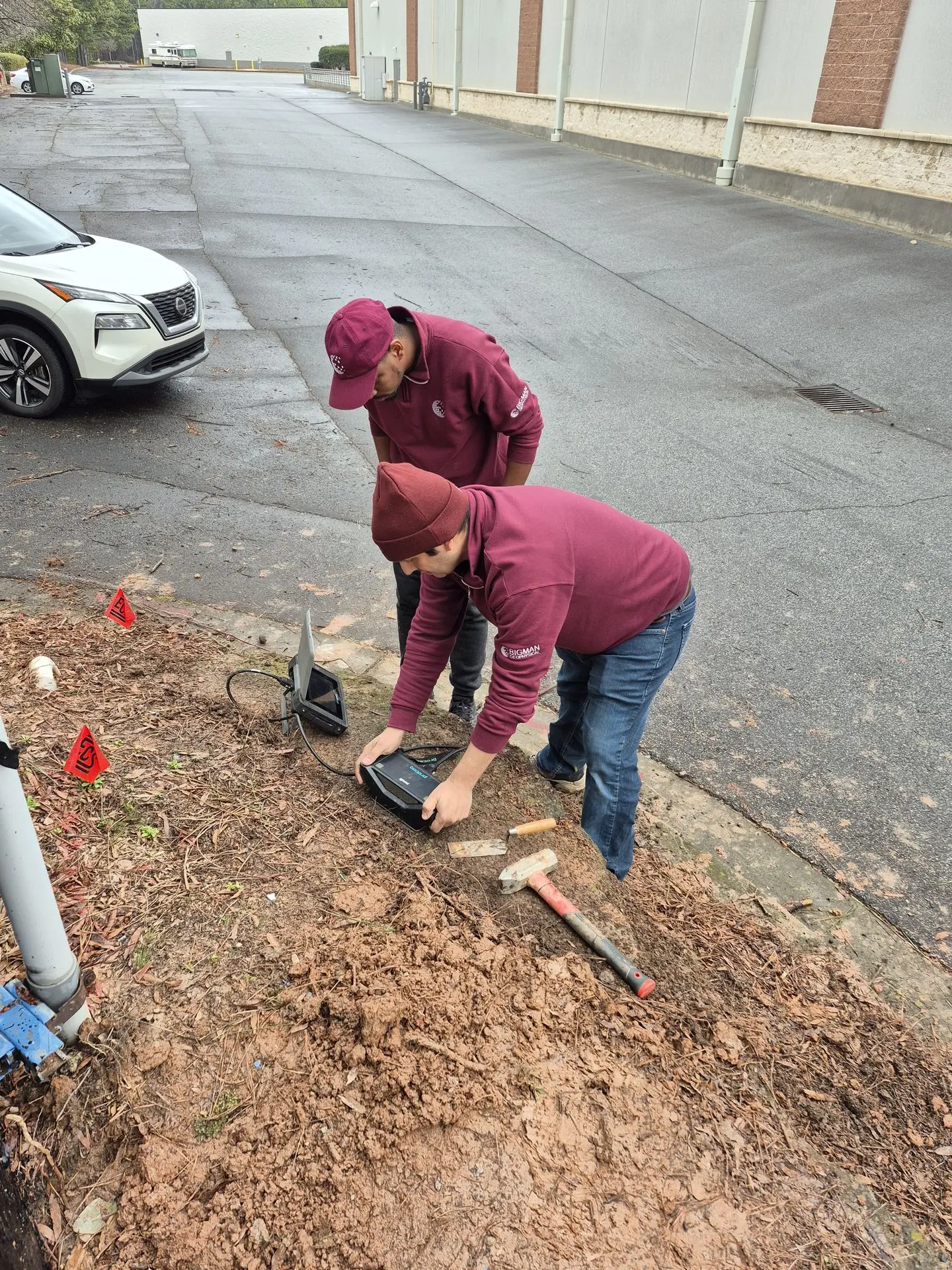
Ground Penetrating Radar (GPR): We used the Leica DS4000 to scan the area around the pile to identify material changes and map the pile's diameter.
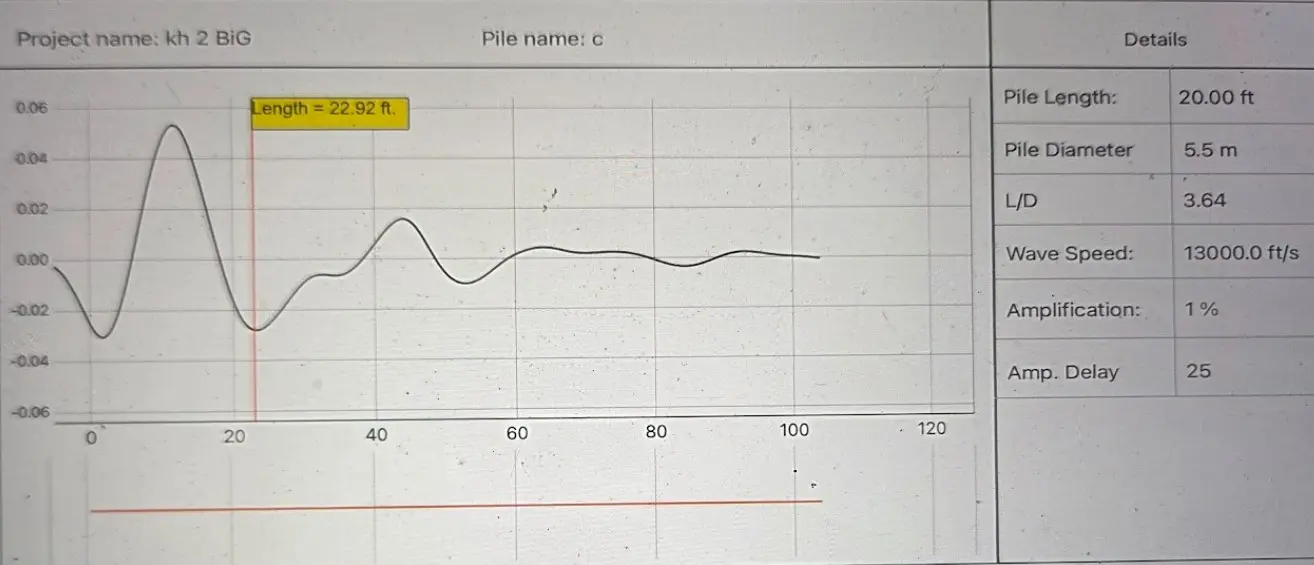
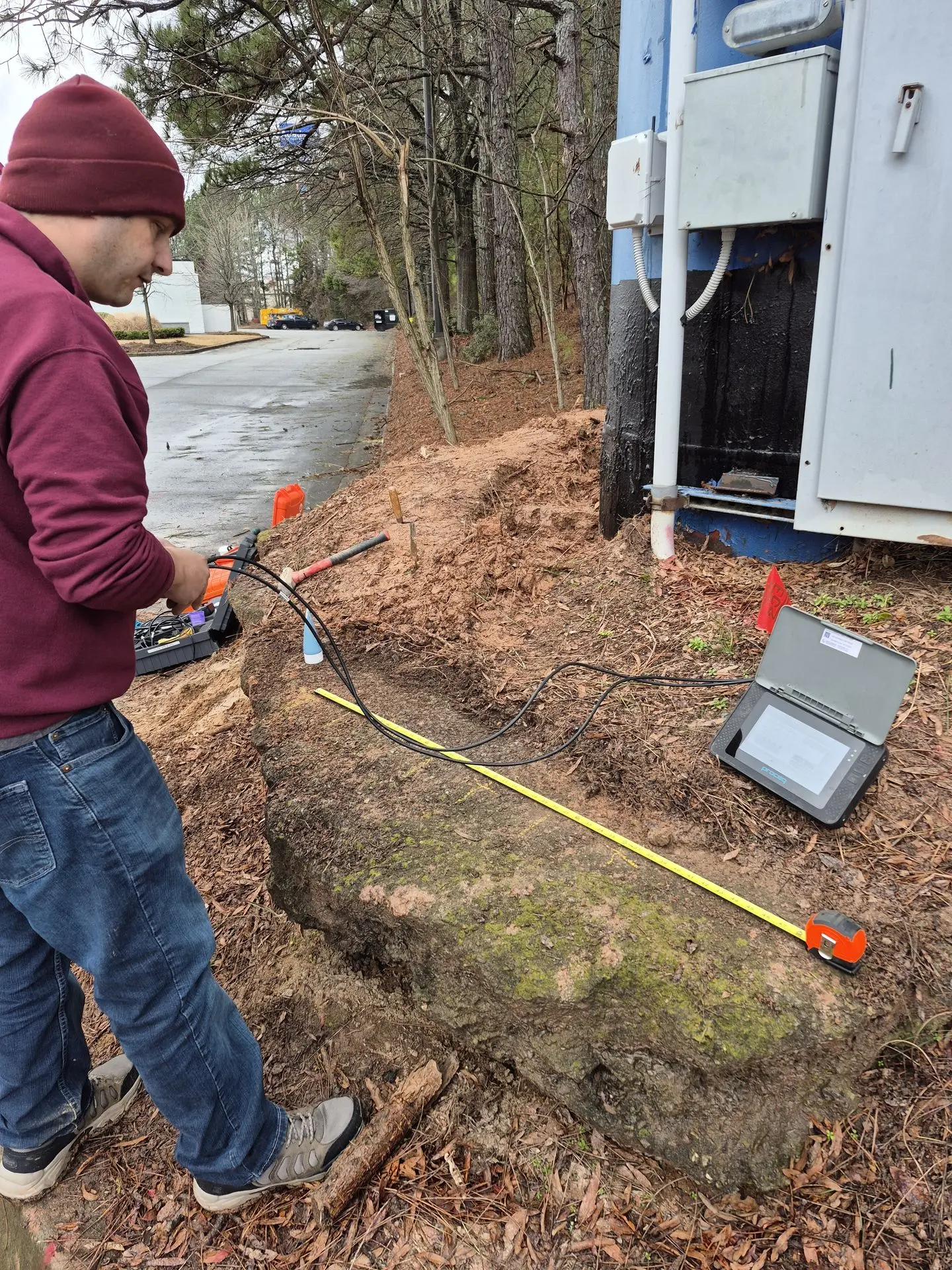
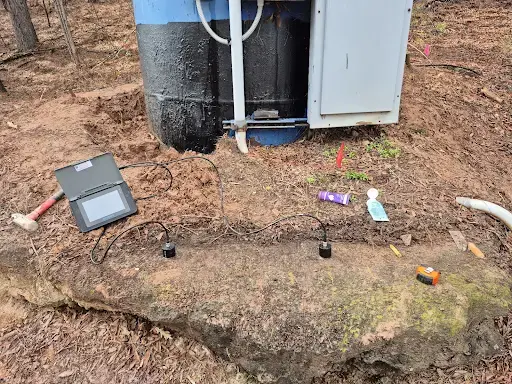
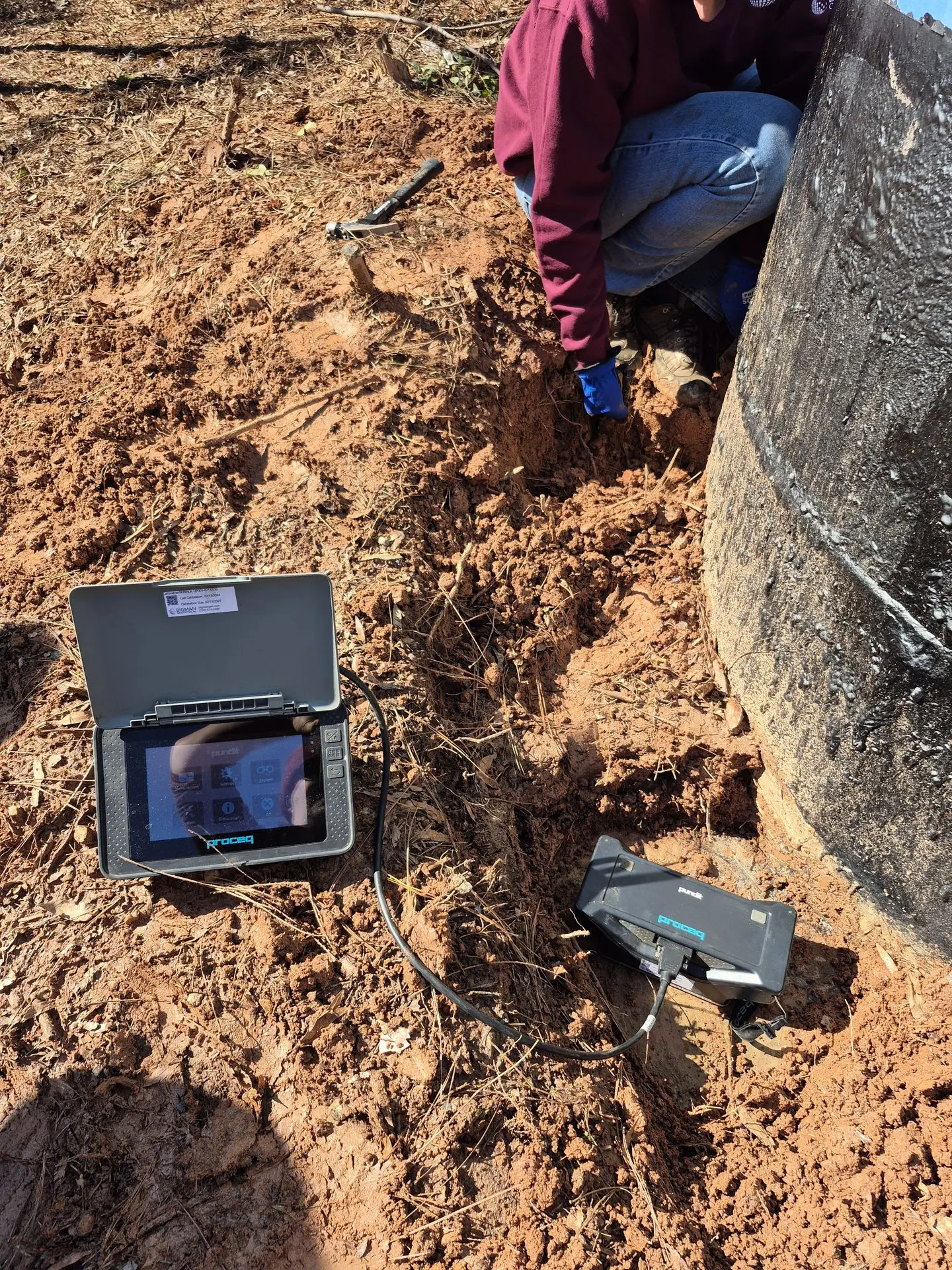
iPile (Low Strain Pile Integrity Testing): This method involves striking the pile head with a handheld hammer and recording the reflected stress waves to identify the pile’s "toe" (bottom).
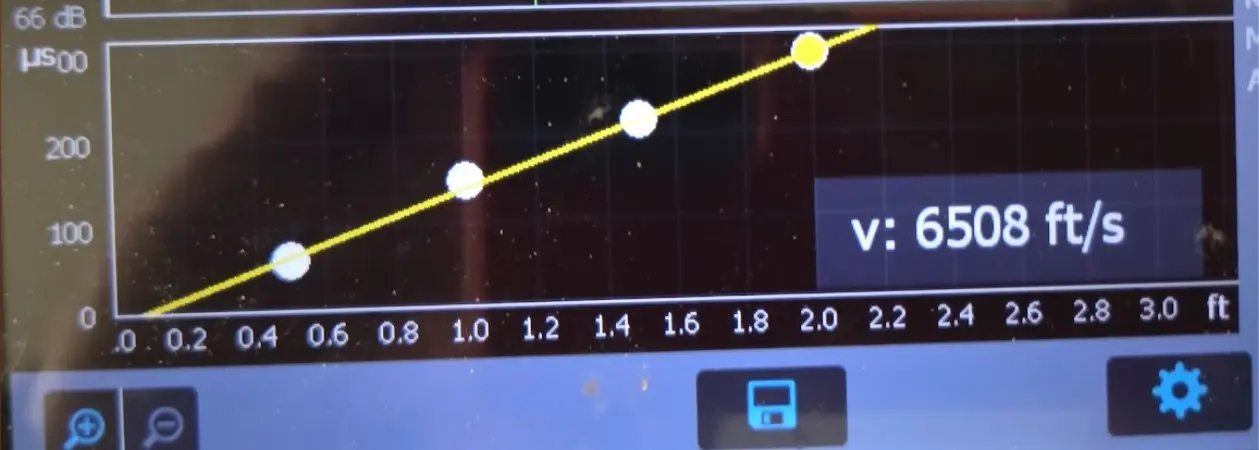
Ultrasonic Pulse Velocity (UPV): When the rough, weathered surface of the concrete overpour made standard echo testing difficult, we adapted by using a "surface wave" technique to determine the precise velocity of energy traveling through the concrete. This allowed us to accurately scale our other readings for a more precise depth estimate.
The Results
The investigation successfully confirmed the subsurface dimensions through data correlation:
Confirmed Depth: Both the GPR and iPile systems recorded responses consistent with a bottom-of-pile depth between 19.2 and 22 feet, aligning perfectly with the client's expectations.
Mapped Diameter: Despite muddy and rough site conditions, GPR profiles indicated that the underground portion of the pile was wider than the visible structure, likely measuring between 9.5 and 10 feet in diameter.
By combining multiple NDT methods, we were able to provide our clients with the high-confidence data they needed to make informed decisions about their existing infrastructure.