Bigman Geophysical released to the public a video lesson that explores how Ground Penetrating Radar (GPR) can be used to identify active water or sewer leaks, focusing specifically on advanced data visualization techniques. While GPR doesn't directly see "flowing water," it is highly effective at mapping the secondary structural impacts of a leak—namely, water saturation in the surrounding soil.
Key Concepts
The Power of 3D Time-Slicing: While standard 2D line scans might only show minor anomalies, using 3D visualization (time-slices) allows operators to view horizontal layers of the earth at specific depths. This makes it far easier to spot the exact source of a leak.
Mapping the Plume Direction: By analyzing the data in 3D, technicians can trace the geometry of the water saturation boundary. This allows teams to determine not just where the leak is located, but the exact path and direction the leak plume is spreading underground.
Cross-Industry Applications: The presenter notes that this exact same method of tracing saturation boundaries and plumes is critical for environmental site assessments, such as mapping contamination plumes spreading from leaking underground fuel storage tanks.
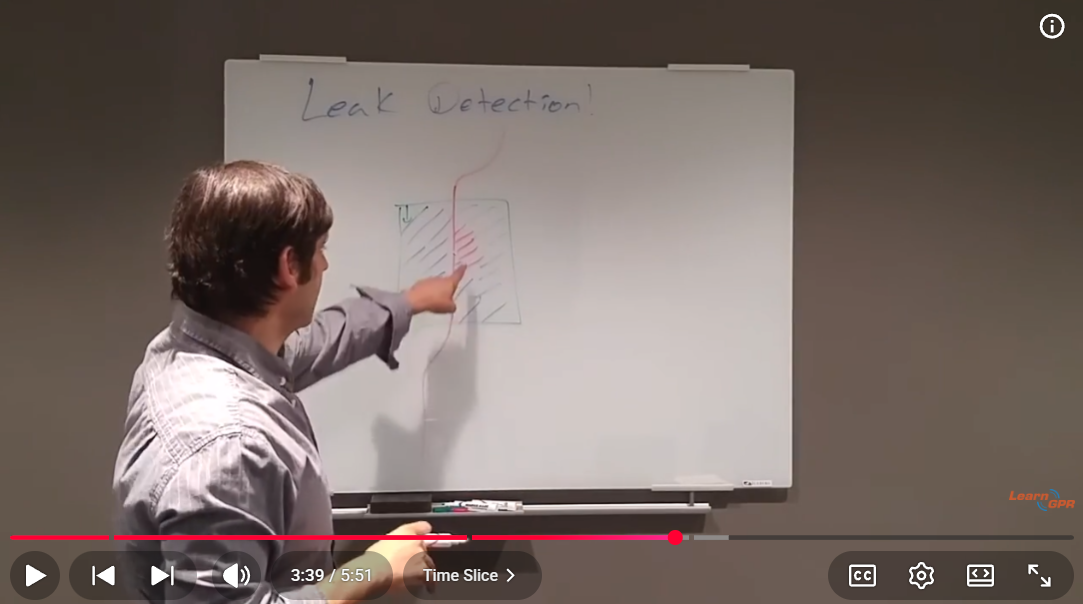
Watch the Pipe Leak Location Video Tutorial Here