In the world of high-rise construction and structural engineering, the ability to "see" inside concrete is not just a luxury—it’s a safety requirement. When dealing with suspended slabs in modern skyscrapers, the subsurface environment can be incredibly dense, housing layers of reinforcement, electrical conduits, and specialized structural materials.
A recent investigation by our team highlights how Ground-Penetrating Radar (GPR) and advanced data processing are transforming how we approach these complex environments.
The Challenge: A High-Stakes Environment
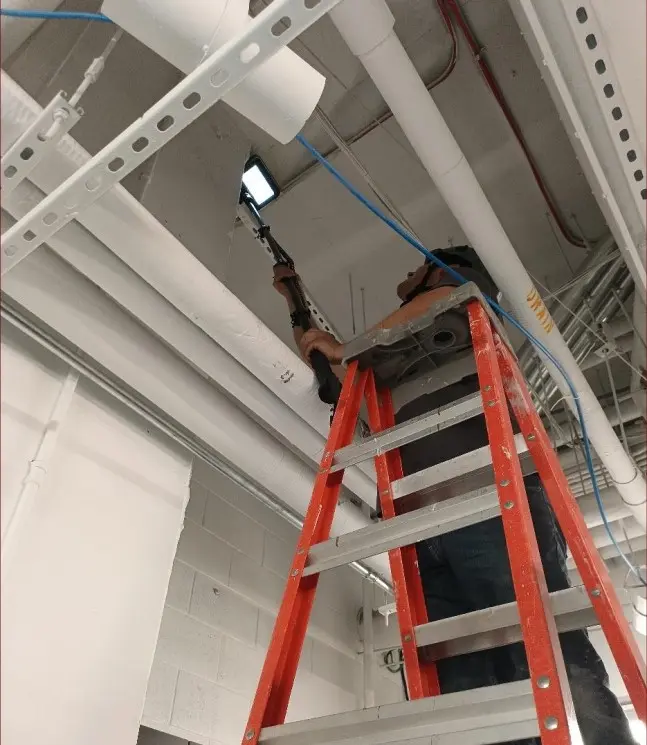
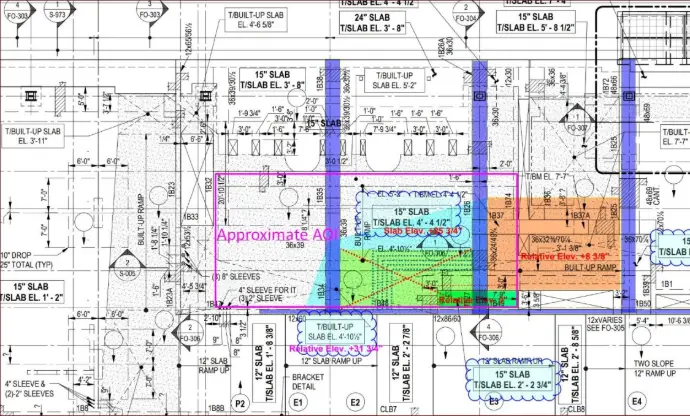
Our team was recently tasked with investigating a suspended slab in a prominent high-rise tower to address structural concerns and inform future planning. The goal was to record reinforcements and other features of interest within a highly complicated concrete environment. In such projects, precision is paramount; hitting a single post-tension cable or a critical utility line during coring can lead to costly delays or significant structural risks.
The Methodology: Precision Non-Destructive Testing
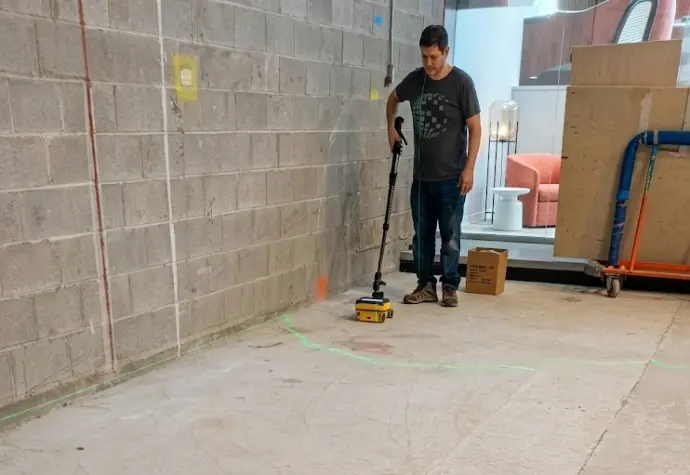
To map the interior of the slab without causing any damage, we utilized GPR technology. This method works by sending electromagnetic pulses into the concrete. When these waves encounter a change in material—such as moving from concrete to steel rebar—they reflect back to the surface.
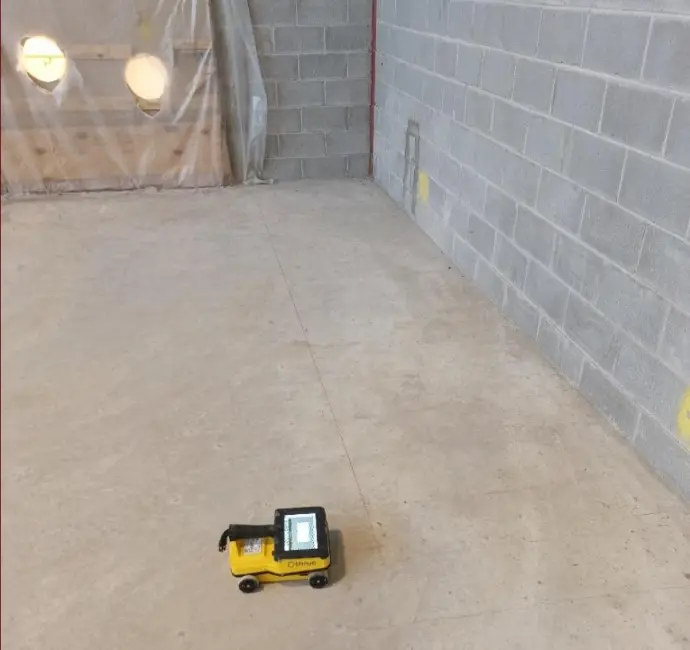
For this project, we used the IDS C-Thrue system, a dual-polarity concrete scanner known for its ability to handle custom grids on-site. To ensure the highest level of accuracy, we also employed a laser line system to maintain straight paths during data collection, even across uneven slab surfaces.
From Raw Data to 3D Models (Scan-to-BIM)
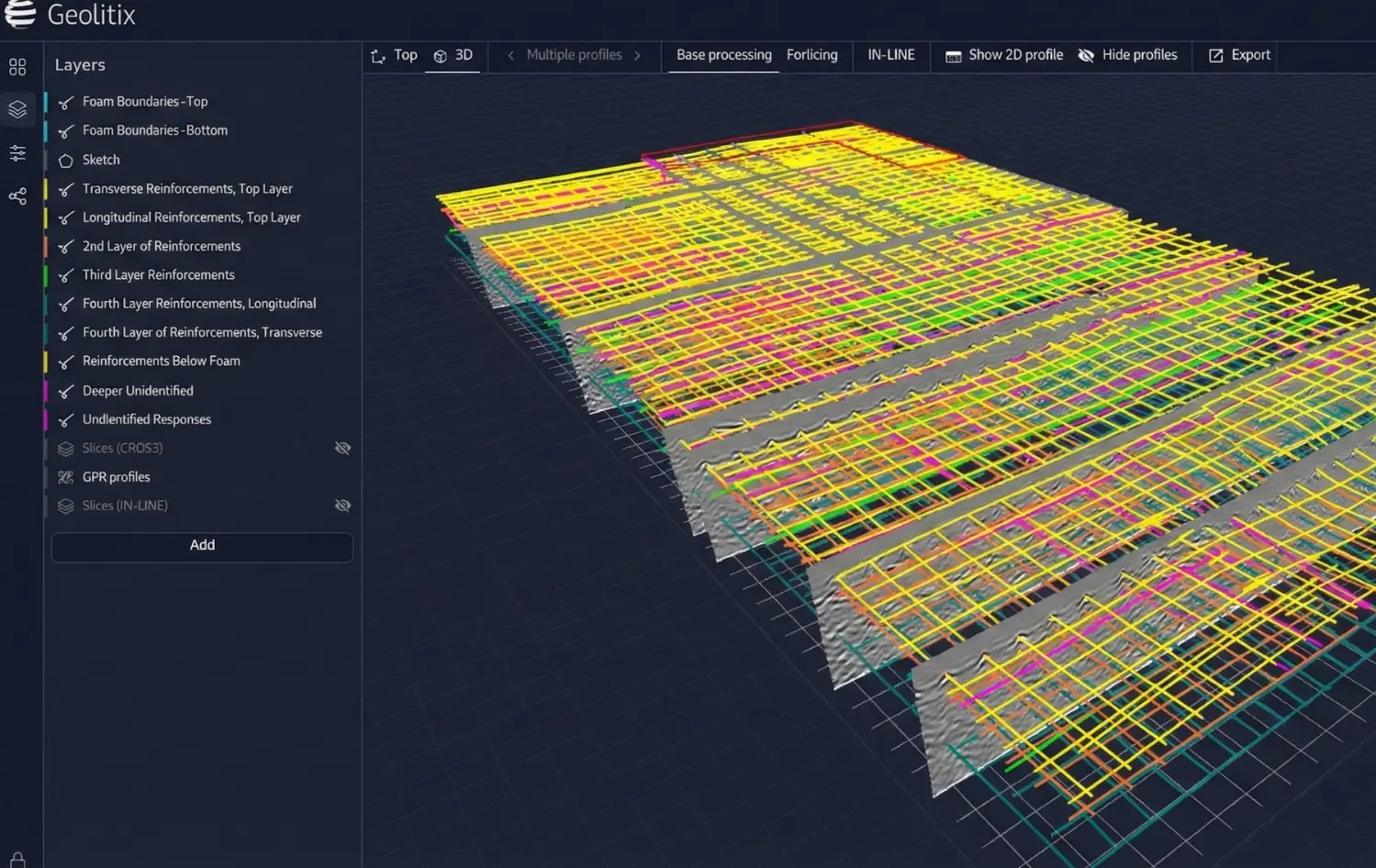
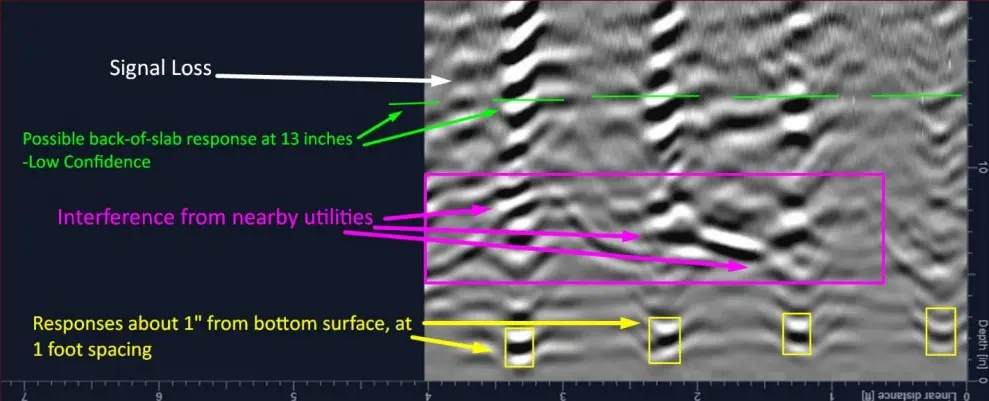
Raw GPR data provides a "radargram"—a two-dimensional cross-section of the subsurface. While useful, the true power of this technology lies in data processing. Using specialized software like Geolitix, we processed these vertical profiles into 3D volumes and "time-slices".
By applying advanced filters and "hyperbola fitting" to estimate signal velocity, we were able to:
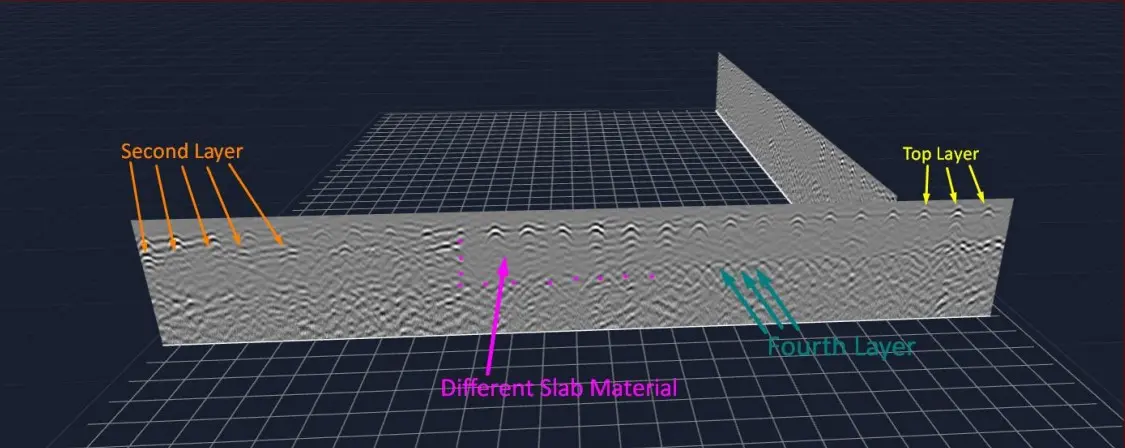
Identify multiple distinct layers of metal reinforcements.
Differentiate between standard rebar grids and deeper structural supports.
Map unidentified features, such as electrical conduits or utility lines, which are always marked for avoidance to maximize safety.
Specialized Findings: Detecting Structural Foam
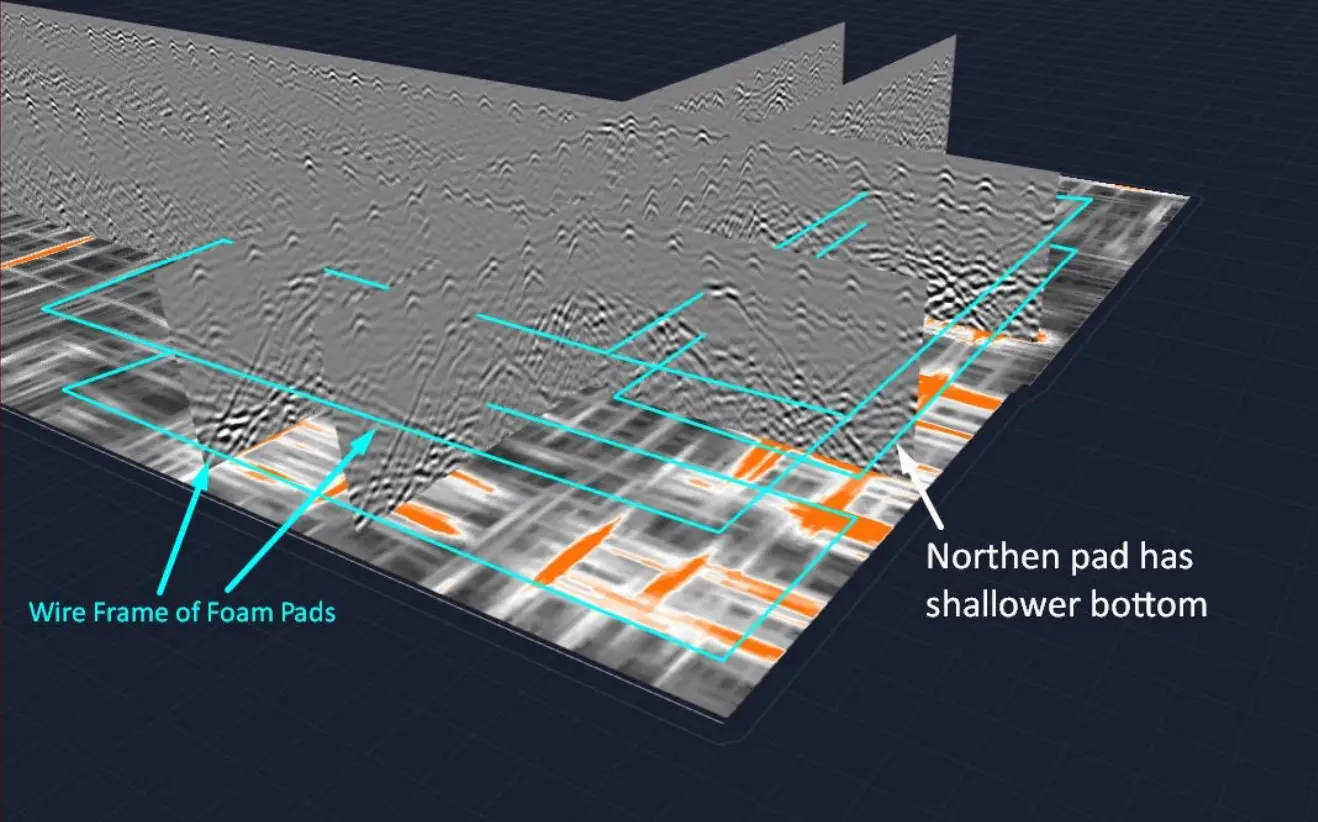
One unique aspect of this investigation was the detection of structural foam. Property owners suspected these mats were located beneath the slab in specific areas. Because foam is a radio-negative material, it appears in GPR data similarly to air pockets. Our team successfully identified the edges of these mats, providing the client with a clear picture of what lay beneath the concrete.
The Result: Informed Decision-Making
The culmination of this work was a detailed 3D model provided in AutoCAD and GIS formats. This "Scan-to-BIM" approach allows engineers to integrate subsurface data directly into their project designs.
Beyond the digital model, our team provided on-site markings for "safe to core" locations. While no geophysical investigation is 100% certain, using GPR remains the gold standard for minimizing risk when drilling or cutting into reinforced concrete.
Conclusion
As buildings become more complex, so do the systems hidden within their floors and walls. By combining expert analysis with high-end GPR technology, we can provide a clear, non-destructive window into the subsurface, ensuring that future modifications are handled with the highest degree of safety and precision.