When a state department of transportation recently noticed potential red flags on a newly constructed bridge, they didn't want to just guess at the problem. To protect the integrity of the critical infrastructure without causing damage, they turned to high-tech "concrete forensics" to see what was happening beneath the surface.
Our team was called in to analyze a comprehensive ground-penetrating radar (GPR) dataset of a bridge deck. The mission: find out if differential concrete quality—potentially caused by chemical intrusion, pour techniques, or incorrect material mixtures—was putting the structure at risk.
The Tech: X-Ray Vision for Infrastructure
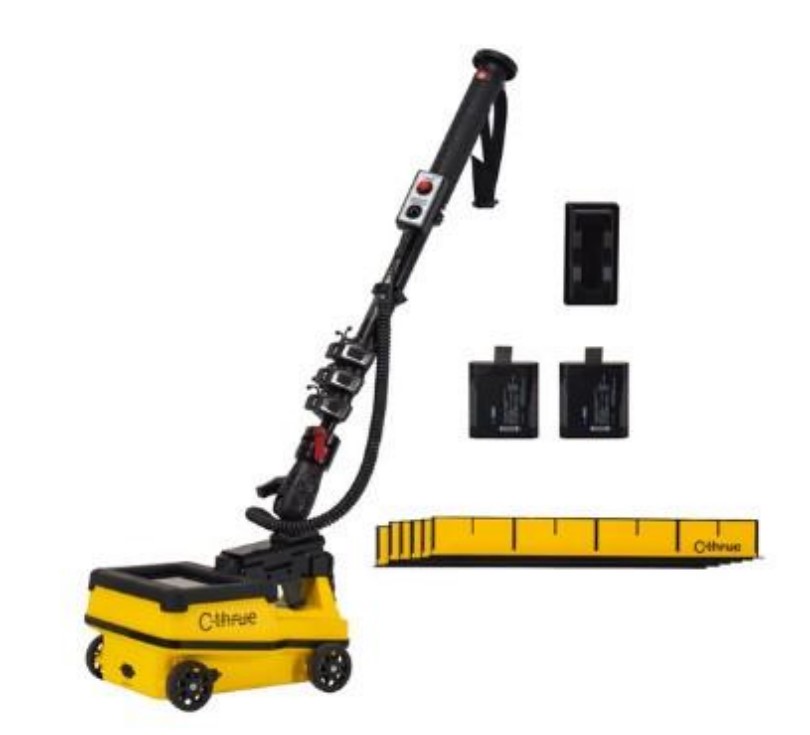
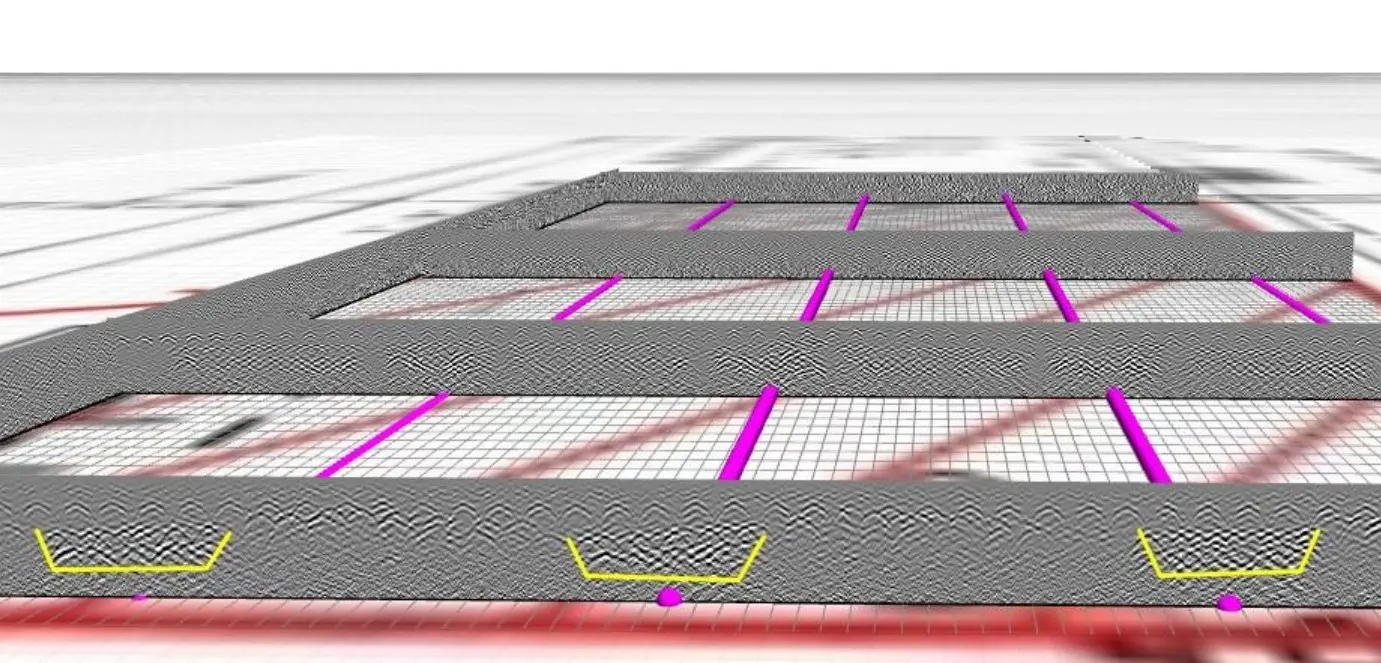
To map a massive $100' \times 45'$ survey area quickly and accurately, we utilized a specialized concrete scanning device equipped with cross-polarized antennas. This allowed us to record lines at tight 6-inch and 12-inch intervals, creating a high-resolution 3D model of the bridge's internal anatomy.
The Investigation: Searching for "Signal Dampening"
GPR works by sending electromagnetic pulses into the concrete. When those pulses hit something like rebar or a change in material, they reflect back.
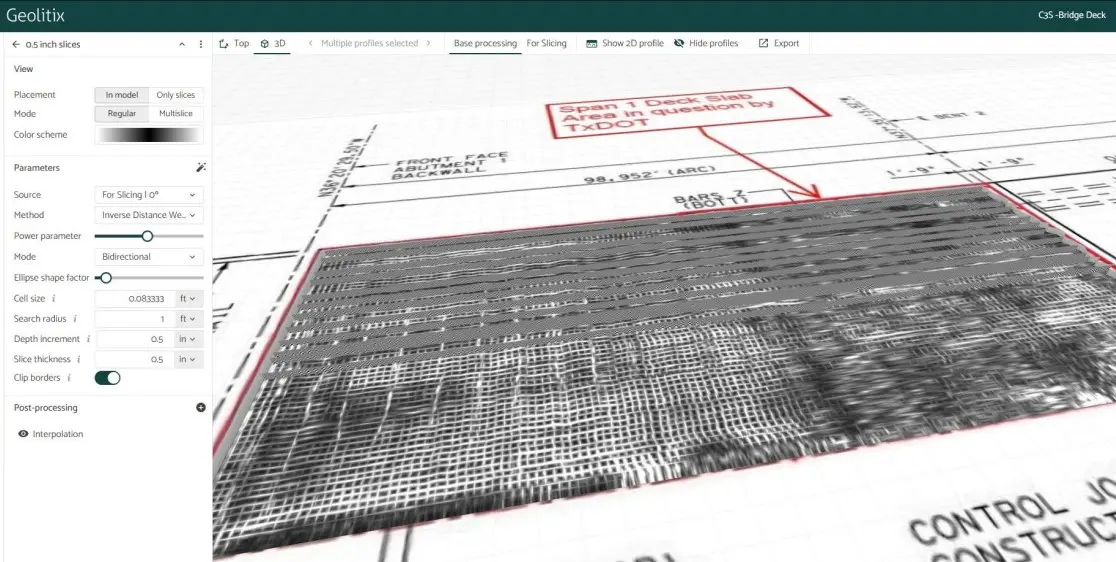
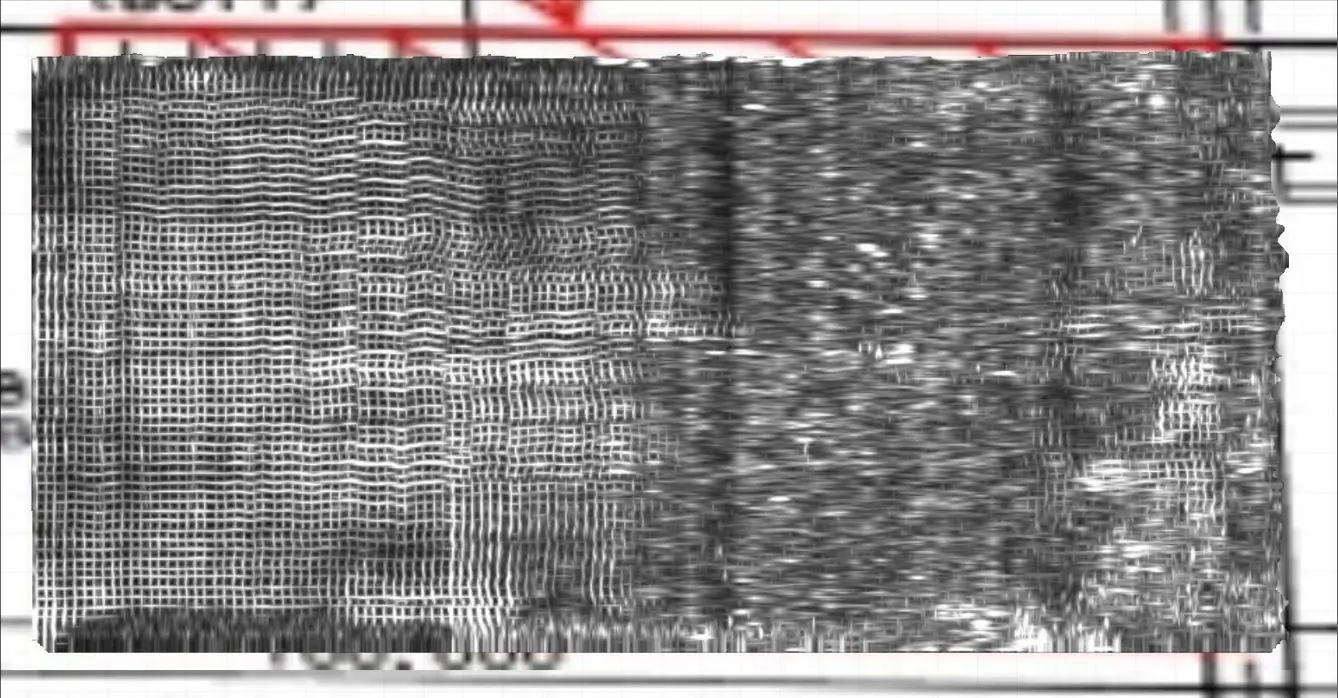
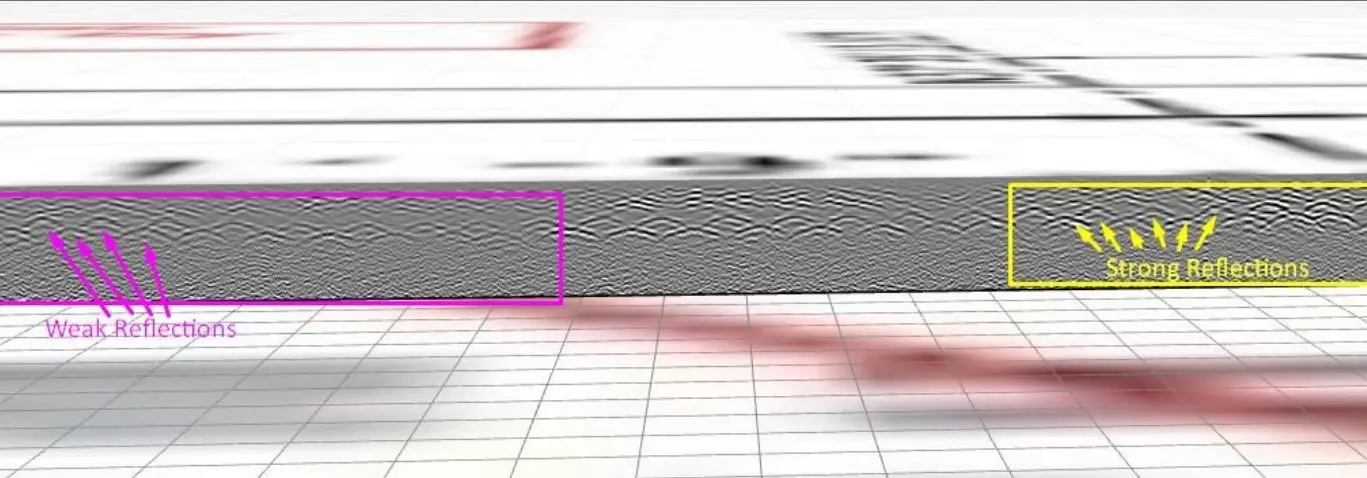
In a perfectly healthy bridge, these reflections are strong and uniform. However, as we scanned this deck, we found a significant "Area of Concern" (AOC) where the signal began to fade—a phenomenon known as signal dampening.
Key
Observations
Supporting Data
Key Findings from the 3D Model:
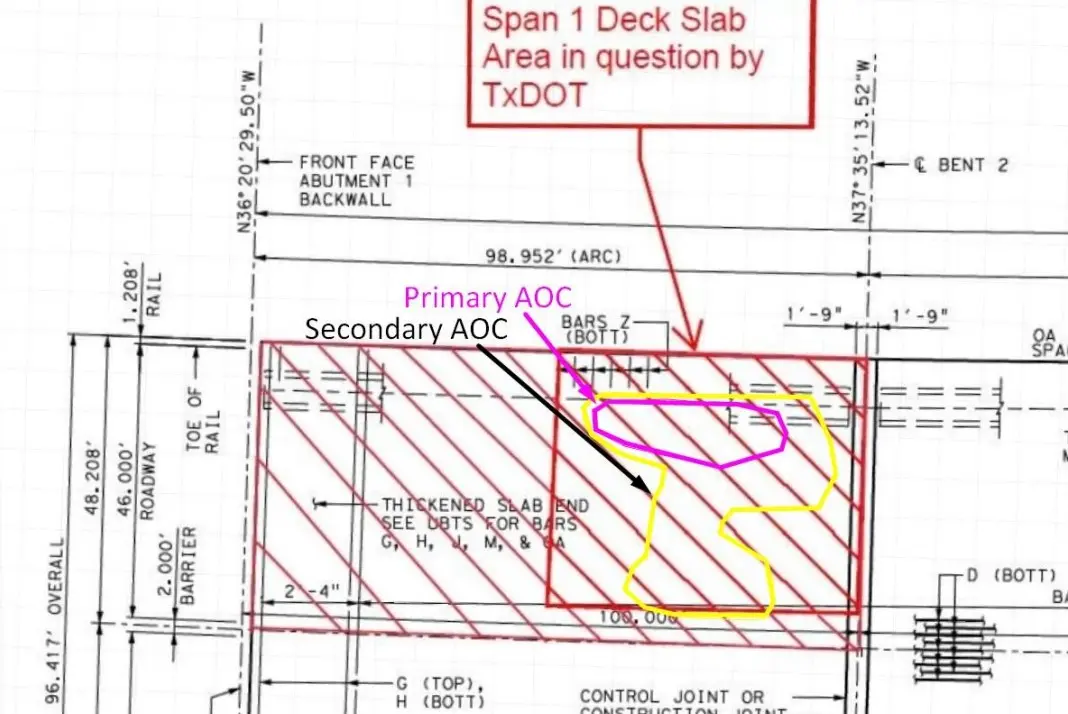
The "Shadow" Area: We identified a non-rectangular region where radar responses from steel reinforcements were significantly weaker than the rest of the grid.
Dielectric Differences: In healthy areas, the concrete had a relative dielectric permittivity of 8.3. Within the AOC, that value jumped to 8.6.
Physical Evidence: This shift in values confirms that the problem is likely within the concrete material itself, rather than just the rebar.
What’s Really Going On?
A drop in signal strength like the one we found is usually a "smoking gun" for one of three things:
Trapped Moisture: High moisture levels dampen radar energy, making reflections appear "fuzzy" or weak.
Early-Stage Corrosion: If rebar begins to corrode, it creates a rough, diminished surface that doesn't reflect energy as cleanly as smooth steel.
Material Irregularity: Chemical intrusions or a bad "mix" during the pour can change how waves travel through the slab.
The Bottom Line: Data-Driven Decisions
While GPR is an incredible tool for identifying where a problem is, it can't always tell you exactly how bad it is on its own. Based on our findings, we recommended targeted, minimally invasive sample coring within the flagged area.
By using GPR first, the agency knew exactly where to look, saving time and money while ensuring that any repairs are based on hard data rather than guesswork. With only a handful of cores completed, the customer was totally confident in the assessment, and determined that Bigman Geophysical had described the issues exactly.